

What You See Is What They Become
See them clearly.
One of the leaders I coach, a President working closely with her company’s CEO, took a week off this summer. Before she left, she would have told you she was the person decisions ran through. Not because she wanted it that way. Because years of being useful had built it that way, one small rescue at a time.
While she was out, her VP of Marketing ran two go/no-go calls on his own. Real decisions, the kind she would normally have weighed in on before they finalized. When she got back, she did not review what he had chosen. She did not check his math behind his back. She told him, specifically, what he had done well.
That is the whole shift, in one week. He stayed in his own problem-solving because no one stepped in to finish it for him. She became a Coach not by practicing to be one, but by choosing, once, to notice competence instead of stepping into it.
This is close to the most common pattern I see in coaching. Something outside a leader’s control forces the work to be tested, and the shift that sticks is the one made in real time, not the one planned in a session.
That is the argument this whole series has been building toward, and the Drama Triangle names it outright. Three roles, Hero, Victim, Villain, rotating through every team, every culture, every room where people are working hard and still getting stuck. If you have been reading this series, you have already traced how the triangle sustains itself, what it costs, and where your own fingerprints show up on it.
This article is about what becomes possible on the other side of that reckoning. Specifically, what you see when the triangle busts open.
The triangle runs on perception as much as behavior. The hero sees someone who needs rescue. The victim learns to need it. The villain generates the friction that makes rescue feel urgent. Each role is partly a response to how it is being seen. Which means the leader who changes what they see, changes what the room produces.
That is not a small claim. It is the whole argument.
The counterparts to the three triangle roles need to be known if you are ever to stop running the triangle’s bases. If you have encountered the ABC framework in this work before (Autonomy, Belonging, and Competence) you will recognize what is underneath each one. These are the three conditions people need to show up as their full selves. The triangle suppresses all three. The counterparts restore them.
- The Victim becomes the Creator (Autonomy). Not someone who never struggles, but someone whose autonomy has been respected enough that they have stayed in contact with their own problem-solving. They are still in the work, still trying, still finishing their own sentences. The hero's habit of stepping in before that process completes is exactly what keeps the Creator from showing up.
- The Villain becomes the Problem Solver (Competence). This isn't friction disappearing. It's the same impatience and tendency toward judgment, given a constructive object. The urgency that made them difficult becomes the thing that moves the work forward, once a leader stops trying to contain it and starts pointing it somewhere useful. It also has a huge impact on modeling accountability.
- The Hero becomes the Coach (Belonging). The need to be recognized hasn't gone away. It has found a different expression: building others instead of being indispensable to them. The satisfaction they were looking for still arrives, just differently, through being trusted to develop someone else rather than being needed by them. The week away showed what that looks like in practice: the vacation forced competence instead of needing to be managed from a distance.
When the triangle busts open, what you are left with is a room full of critical-thinking problem solvers. That is not an accident. It is what capable people do when the leader gets out of their way.
The elevation of your leadership is in direct proportion to how much capability you can see in the people around you and trust enough to leave alone.
Most leadership culture rewards the opposite. Speed is rewarded. Decisiveness is rewarded. Being the person with the answer is rewarded. The leader who pauses, who asks instead of tells, who watches someone work through something they could have resolved in thirty seconds. That leader does not always look effective in the moment.
They look effective over time. Because their team grows. Because the people around them develop judgment rather than dependency. Because the room starts producing answers the leader did not have to supply.
Here is the hard truth: You don’t graduate from the triangle. You come back to it repeatedly, with varying degrees of awareness and recovery.
There are days when the frustration wins and you become the critic, assigning blame before asking questions. The villain role feeds on the leader who has run out of patience. There are other days when the weight of it becomes too much and you step back in a way that looks like trust but is actually exhaustion. The accountability slips. The team reads the abdication clearly even when you cannot see it yet. That is the victim pattern running in a leader.
When you catch yourself in the criticism, or the abdication, or the rescue, and you will, the real question is how quickly you can see it, name it, and choose again.
That capacity to see it, name it, and return is a practice, not a trait you’re born with. The shift comes from the accumulation of moments where you saw someone’s capability before you saw their deficit and acted from that seeing. Every time you ask instead of tell. Every time you stay still when the old pattern says move. Every time you trust the process over your own efficiency.
You are no longer asking what these people need from you. You are asking what they are capable of, and what you have been doing that has kept that capability from being fully visible.
See a Creator where you have been seeing a Victim. See a Problem Solver where you have been seeing a Villain. See a Coach where you have been seeing someone who needs to be managed.
That is not a reframe exercise. It is a daily decision about what you are looking for when you walk into a room. And it compounds. Every time you see capability before deficit, every time you name what someone did well instead of stepping into what they left unfinished, the room recalibrates. Not because you announced a new approach. Because you acted from a different belief about who is standing in front of you.
The witnessing role is not the lesser role. It may be the most important one. The President who came back from a week away and told her VP specifically what he had done well was not withholding her expertise. She was handing him something more durable than her answer. She was handing him evidence of his own capability.
That is what stays. Not the rescue. The moment someone was seen clearly enough to grow past where they were.
What you see is what they become. The ceiling is yours to raise.
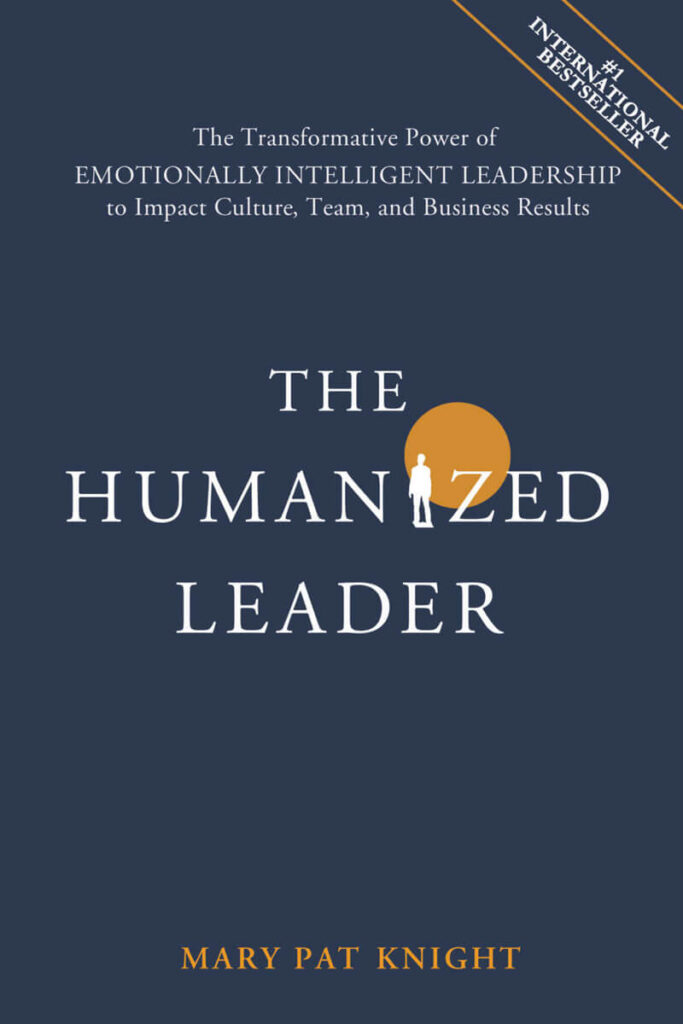
Mary Pat Knight is CEO of Leaders Inspired – an executive coaching and consulting agency devoted to the development of emotionally intelligent leaders. She is also the author of the Amazon #1 International Best Selling book, The Humanized Leader.
The ground-breaking new book, The Humanized Leader: The Transformative Power of Emotionally Intelligent Leadership to Impact Culture, Team and Business Results, is now available in Kindle, paperback, or as an audiobook. To get your copy – or extras for your team, click the button below.