
I Can See It. Should I Say It?
She’d built the thing for years, and it had worked, until it didn’t anymore. Nothing broke all at once. The model that used to work just stopped working, slowly enough that nobody could point to the exact day it happened.
In the coaching session, the ideas came fast. One pivot, then another, then a third that didn’t match the first two. She’d pick one up, get excited about it, then drop it for the next. None of them had been tested yet. She wasn’t really choosing a direction. She was trying to make the spinning stop.
Then she landed on one. It wasn’t clearly the right one. It was just the first thing that felt solid enough to stand on.
Something lit up in me before she’d even finished explaining it. I felt relief that we finally had something to work with. And before I noticed what I was doing, I was building it out for her. Naming next steps. Filling in a plan she hadn’t asked me to build. I wasn’t helping her find her own answer anymore. I was handing her mine and letting it look like it had been hers all along.
She left the session with a plan. I always take time after a call to reflect on how it went, and it was only then, going back over what actually happened, that I saw what I’d done. By that point, the plan was already in her hands.
I know this impulse well. There are moments when I can see a possibility forming before the person I’m working with can see it themselves. Experience does that. After enough years of working with people, you recognize patterns. You hear something underneath what is being said. You have an instinct about where something might be going.
The problem isn’t that I see it. The question is what I do with what I see.
Early in my training, I was learning to listen differently. We were being taught to trust intuition, see clearly, and resist the temptation to solve something another person needed to discover for themselves.
I remember working with someone in front of my training cohort. I could see something, or at least I believed I could, so I said, “I see something here.” Then, being a very earnest student of the process, I proceeded to ask question after question, trying to help her find her own way to what I could already see.
Finally, my teacher interrupted me.
“Why do you make her suffer? Just tell her what you see.”
That was decades ago, and I’ve never forgotten it.
Perhaps I’ve never forgotten it because there isn’t a rule that neatly reconciles these two experiences. Sometimes stepping in too soon takes something away from another person. Sometimes withholding what you see in the name of helping them discover it for themselves just makes the journey longer and harder than it needs to be.
In the next session with my client, she began spinning again. One idea, then another. This time I stayed with her instead of building the answer for her. I asked questions and allowed more space. Eventually, she found her own way to an answer, one that held up when she tested it.
In that moment, staying out seemed to serve her. That doesn’t mean it always will.
I think that’s why my teacher’s words have stayed with me for so many years. She wasn’t giving me permission to always tell someone the answer. She was reminding me that holding back can become every bit as rigid as stepping in. I can interfere by saying too much, and I can interfere by being so committed to someone finding their own way that I withhold something that might genuinely serve them.
Experience has helped. Intuition helps. Knowing my own patterns helps. I’ve also learned to ask permission sometimes: “I think I see something here. Would you like to hear it?” That doesn’t tell me whether what I’m seeing is right, but it gives the other person a choice about whether they’re ready to have me put it into the room.
Maybe that’s one of the things experience actually gives us. Not a better formula or a guarantee that we’ll make the right move, but more capacity to meet the moment before deciding what it requires of us.
Sometimes I speak and sometimes I wait, and sometimes I only know afterward whether I wish I’d done the other.
Author’s note: This piece was inspired by a real conversation, but it is not a literal account. Details have been changed to protect the privacy of the people involved.
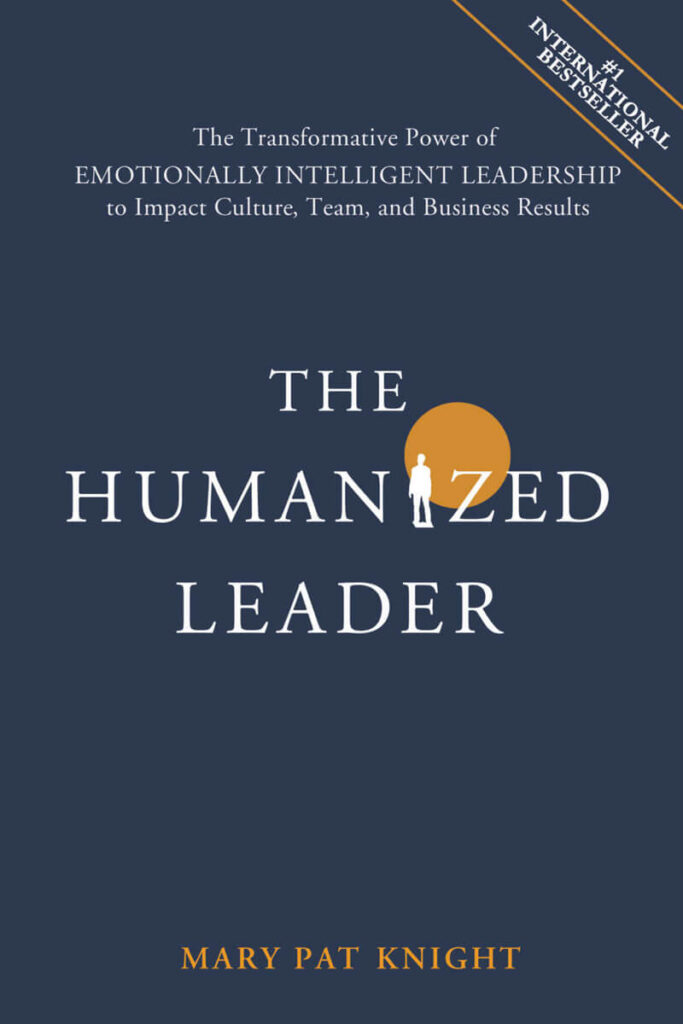
Mary Pat Knight is CEO of Leaders Inspired – an executive coaching and consulting agency devoted to the development of emotionally intelligent leaders. She is also the author of the Amazon #1 International Best Selling book, The Humanized Leader.
The ground-breaking new book, The Humanized Leader: The Transformative Power of Emotionally Intelligent Leadership to Impact Culture, Team and Business Results, is now available in Kindle, paperback, or as an audiobook. To get your copy – or extras for your team, click the button below.