

Did I Do This?
A decision made by a relatively new employee cost the company nearly a quarter-million dollars before anyone caught it.
The employee had only been in the role a few weeks and had recently been given the authority to make that kind of call independently.
That’s what I heard first, before I found out who had made the decision to give them that authority in the first place.
Weeks earlier, a leader I was coaching had made a call that looked like good leadership. They’d been working hard to stop micromanaging and to fight the urge to hover and double-check work that wasn’t theirs anymore. So, they stepped back and gave the manager real autonomy. That’s what letting go is supposed to look like.
The manager took that freedom seriously. But somewhere along the way, without that extra layer of oversight, the manager made a delegation decision that had real consequences. A relatively new employee was given authority to make a significant decision independently. It went badly, and by the time anyone realized it, the company was facing a loss of nearly a quarter-million dollars.
I still don’t know what really happened. Was this a rough patch, the kind of mistake that happens when someone is learning to carry more responsibility? Or had the manager reached the edge of what they were ready to handle? Did the manager need more room, or more support? More importantly, how was the leader supposed to know?
Months later, I don’t have a clean answer to that question, and neither does the leader. That’s what has stayed with me about this story.
We talk a lot about delegation as though the hard part is letting go. For many leaders, it is. We know we’re supposed to stop doing other people’s jobs, stop checking everything, and stop stepping in simply because we can do something faster or better ourselves. But handing something off is only part of the job. The harder part may be knowing when someone is actually ready to carry what you’ve handed them.
Sometimes you don’t know until something happens.
When the cost shows up, when something breaks, a client walks, a deadline gets missed, or a decision suddenly has a six-figure consequence, an old instinct can come roaring back. If it’s going to get done right, I’d better do it myself.
This leader didn’t do that. Instead, they sat down with the manager and rebuilt the process, step by step, so there was less left to guess at the next time. From the outside, that looks like the right response, and maybe it was. But I think even that leaves us with a question. Were they creating the structure the manager needed in order to grow, or was the old need for control finding its way back in, this time looking a lot like support?
I don’t know, and I’m not sure the leader does either.
There is a temptation in leadership to turn every experience into a lesson. Figure out what went wrong, name the gap, build the process, make the adjustment, and move on. Sometimes we can do exactly that. Other times, we’re left with a much less comfortable question: Did I do this?
I don’t mean that as an invitation to blame yourself. Blame is actually a pretty poor teacher. It asks us to go backward and judge a decision using information we only have because something went wrong. That’s not particularly fair, and it isn’t particularly useful.
But neither is looking away.
There is a difference between blaming yourself for what happened and being willing to examine your part in it. A leader can make the best decision available with what they know at the time and still discover later that something was missing. More support was needed. A conversation hadn’t happened. Readiness had been assumed instead of tested. Or perhaps the decision really was sound, and the outcome was simply one nobody saw coming.
The difficult part is that we don’t always get to know which one it was.
That changes the question. Instead of looking for someone to blame, we can look more closely at what we can see now that we couldn’t see before. The leader in this story was the one who decided the manager was ready for more autonomy. If they had stayed closer a little longer, would this have happened? There is no way to go back and find out.
They know more now than they did then. What is done with that knowledge matters. But it doesn’t rewrite what they knew when the original decision was made.
This is one of the places where leadership gets much harder than the frameworks make it sound. How do you know when you’re watching someone struggle their way into greater capacity and when you’re watching them reach the edge of it? How do you know when stepping back is trust and when it’s too much, too soon?
And when something goes badly wrong, how do you look clearly at your part in it without turning that examination into a verdict on yourself or someone else?
That’s a leadership question worth staying with.
Author’s note: This piece was inspired by a real conversation, but it is not a literal account. Details have been changed to protect the privacy of the people involved.
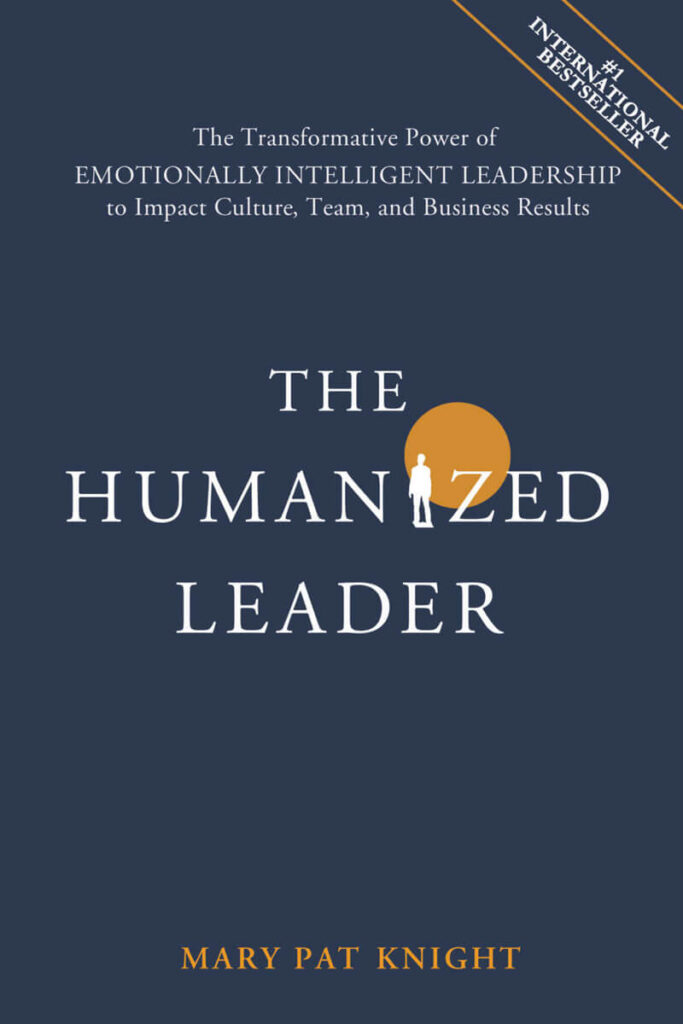
Mary Pat Knight is CEO of Leaders Inspired – an executive coaching and consulting agency devoted to the development of emotionally intelligent leaders. She is also the author of the Amazon #1 International Best Selling book, The Humanized Leader.
The ground-breaking new book, The Humanized Leader: The Transformative Power of Emotionally Intelligent Leadership to Impact Culture, Team and Business Results, is now available in Kindle, paperback, or as an audiobook. To get your copy – or extras for your team, click the button below.