

What Are You Actually Waiting For?
Sometimes It Isn’t Information At All.
One of my clients, a VP who runs operations for a mid-size manufacturer, has known for months that one of his directors probably isn’t going to make it in the role. He’s told me so, almost word for word, in three separate sessions. Each time he adds the same line: I just need a little more information before I move.
Last month I asked him what specific information he was waiting for.
He couldn’t answer.
He had thought about it. But the more we talked, the clearer it became that information wasn’t what he was missing. He had months of performance in front of him. What he lacked was certainty that acting on it would turn out well, and he had been treating the two as the same thing.
They’re not the same. Information can be gathered, but certainty about how people will respond to a hard decision mostly can’t be had, at least not before you make it. So, when we call the missing piece “more information,” we can keep gathering for a very long time and tell ourselves we’re being careful and fair, when we’re really putting off a decision we’re afraid to make.
That fear is easy to miss because it wears something noble. It looks like compassion, or like refusing to rush to judgment. Underneath, it is often the fear of being wrong, or of being seen as the bad guy.
That doesn’t mean waiting is always a mistake. Sometimes it’s exactly what discernment asks for, because a fact is still missing or something doesn’t add up and another conversation needs to happen. But sometimes we know enough already and just don’t feel ready to act on it.
To tell the difference, I ask one question: can you name what you’re waiting to learn? If you can, go and learn it. If you can’t, you may be waiting for the risk to stop feeling like risk.
My client couldn’t name it. He may still learn something that changes his view of his director, but he wasn’t pointing to a missing number or an unfinished conversation. He was waiting for the decision to stop feeling risky.
I know this one from the inside.
Years ago, I had a manager who meant well but had lost her grip on the job, and the mistakes were piling up in ways I couldn’t keep explaining away. I knew letting her go was the right call, for her as much as for the company. What I didn’t want to face was how it would feel. I cared about her, and I didn’t want to be the person pulling the rug out from under her, or the person the rest of the company watched do it to someone they liked. She had also replaced me in that job, so letting her go meant I’d be doing it myself again until I could hire well.
I chose to wait. In the waiting, more and more performance was slipping. I was only prolonging the inevitable.
Eventually I let her go with as much care as I could manage, and then I created the opposite problem. I was already covering two roles and couldn’t stand another day of it, so I hired fast. It was the worst hire of my career. The termination that followed was bigger and more painful than the first, and I still ended up doing the job myself for months until I found the right person.
For a long time, I thought of those as two separate bad decisions. One was waiting too long, and the other was moving too fast.
I don’t believe that anymore.
The long wait built up pressure, and I carried it into the second decision. By avoiding discomfort for so long, I created enough of it that getting rid of it mattered more to me than taking my time.
I still don’t know what the perfect timing would have been, and I suspect that’s the point. There was never a moment when the risk would have disappeared, and the right decision announced itself.
I care less now about whether I’m moving fast or slow, and more about what is driving the pace.
Am I still learning something?
Or am I waiting to feel ready to act on what I already know?
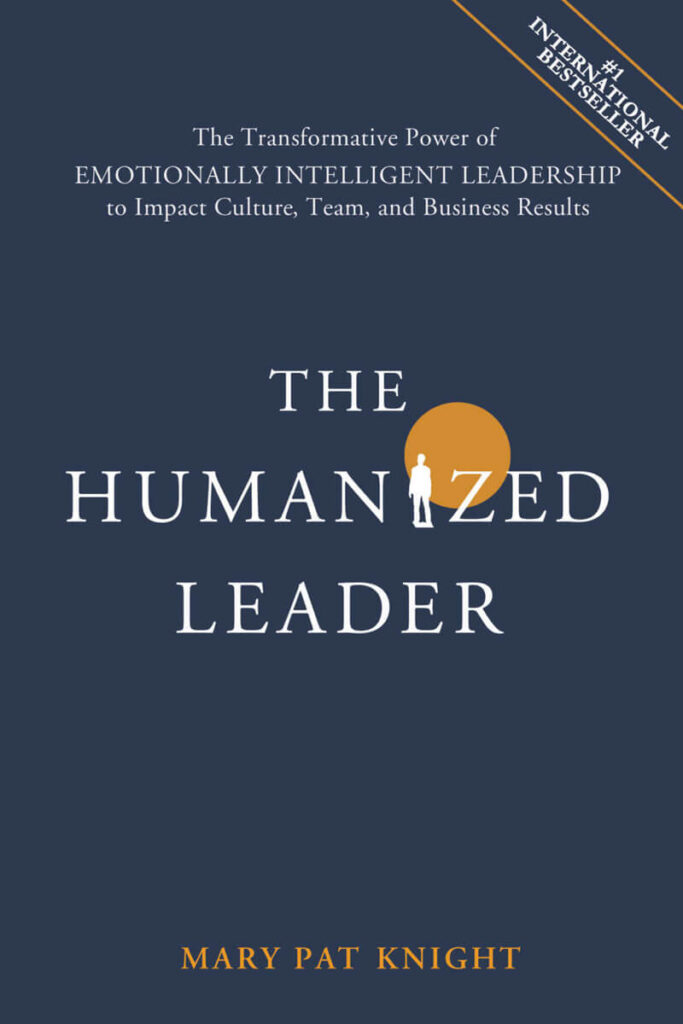
Mary Pat Knight is CEO of Leaders Inspired – an executive coaching and consulting agency devoted to the development of emotionally intelligent leaders. She is also the author of the Amazon #1 International Best Selling book, The Humanized Leader.
The ground-breaking new book, The Humanized Leader: The Transformative Power of Emotionally Intelligent Leadership to Impact Culture, Team and Business Results, is now available in Kindle, paperback, or as an audiobook. To get your copy – or extras for your team, click the button below.