
The Story Fear Writes
A client of mine runs a hundred-person operation. He’s smart, capable, and has spent three years learning to manage himself under pressure. Last spring he sat across from me, and he could not get a single clear sentence out about a conversation he needed to have with his board.
He knew what he wanted to say. He’d known for two weeks. He’d rehearsed it in the shower, in the car, before every meeting he’d chickened out of. This wasn’t a man without a plan. This was a man whose plan had vanished, replaced by something that felt exactly like thinking, but wasn’t.
A story had moved in. Fully formed. Already certain how the conversation would go, what they’d think of him, what it would cost him. It didn’t feel like fear. It felt like fact.
When your brain senses a threat, protecting you gets priority over helping you think clearly. Access to judgment, perspective, and long-term thinking can narrow while the systems designed to keep you safe take over. A leader with twenty years of hard-earned judgment can temporarily lose access to some of that judgment when the threat feels real, no matter how much work they’ve done on themselves.
That’s the part that surprises people who’ve done real work on themselves. You’d think the more self-aware you get, the easier this is to catch. Instead, you stop expecting fear to look like fear. You’re watching for the panic you already know. So when it shows up instead as a calm, certain belief about what someone thinks of you, or what a mistake means, you don’t necessarily recognize it. You think it’s insight. You act on it like it’s true.
There may be another reason we miss it. By the time you’ve reached a certain level of leadership, fear can feel like something you should have outgrown or at least learned to manage. We’re often more comfortable saying, “Here’s what I think is happening” than “I’m afraid of what might happen.” So, fear can get translated into something we’re more willing to trust: information.
The stories fear writes can be remarkably specific. Never simply, “I’m scared.” More often, “She’s already decided I can’t do this.” “If I bring this up, I lose the room.” The specificity makes the story convincing because it sounds less like emotion and more like information.
Good judgment leaves room for what you might not know. Fear is more certain.
I don’t think the answer is learning to stop this from happening. Fear will win that race sometimes, no matter how much work you’ve done. What matters more is that while the story is running the show, everything you’ve actually built, your judgment, your experience, your read on people, hasn’t disappeared. It’s just not driving. And you don’t always know that until later, once you can see what you did with information you didn’t actually have.
I know this because it’s happened to me, not just to the clients I watch it happen to. Two days after that conversation with my client, I caught the same thing happening in myself. I was prepping a keynote I’ve given maybe forty times, and a full paragraph started running in my head about how this particular audience would take one line I’ve never had trouble with. Dead certain. No actual reason to be.
I gave the line anyway.
The only difference was that I noticed I was scared instead of sure.
I keep thinking about how small that distinction can be from the inside. Nothing about the situation changed. I didn’t suddenly have evidence that the audience would receive the line well. I simply became less certain that the story in my head was true.
Which leaves me wondering how often we do the opposite.
Not when we’re obviously afraid. When we’re certain.
What are you certain about right now that you don’t actually know?
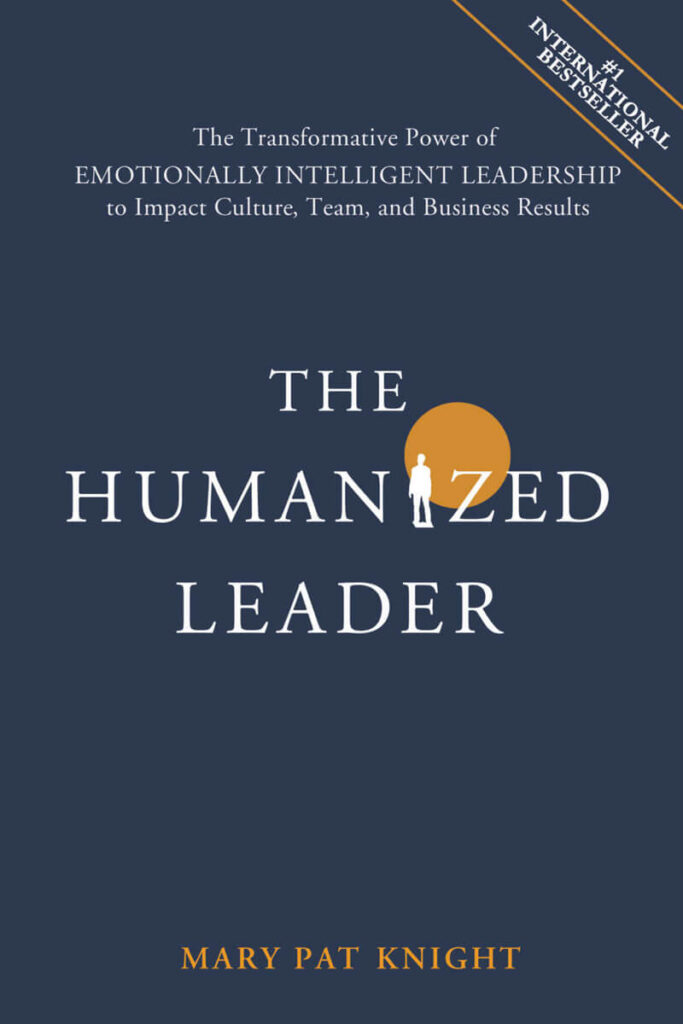
Mary Pat Knight is CEO of Leaders Inspired – an executive coaching and consulting agency devoted to the development of emotionally intelligent leaders. She is also the author of the Amazon #1 International Best Selling book, The Humanized Leader.
The ground-breaking new book, The Humanized Leader: The Transformative Power of Emotionally Intelligent Leadership to Impact Culture, Team and Business Results, is now available in Kindle, paperback, or as an audiobook. To get your copy – or extras for your team, click the button below.