
Redefining Accountability
Accountability that's aimed at the truth, not the discomfort.
Six weeks in, the integrator has to fire a crew lead over a pattern, not a single mistake: the same problem showing up a third time, after two separate conversations where the guy said he understood and then went right back to waiting to be told. The old version of this leader would have handled it one of two ways: absorb it himself and just redo the work, or blow up at the guy in front of everyone to make an example out of him. He does neither. He sits across from him, lays out the three instances plainly, and says the work has to change or the job can’t continue. Then he stops talking and lets the guy respond.
That’s the whole scene. No need to raise a voice or rescue. This was a boundary held by someone who wasn’t currently playing a villain.
This is what people get nervous about, including the leaders who’ve done everything right up to this point. Because somewhere along the way, a lot of people learned that accountability and villainry are basically the same behavior wearing different justifications. You hold a line, someone gets hurt by it, and it’s easy to wonder if you just did the thing you spent two months learning not to do.
You didn’t. But the difference is worth being precise about, because the two things really can look identical from the outside.
1. Villain accountability is about you. Coach accountability is about them.
The villain pattern is driven by frustration that’s been building, and the confrontation is really about relieving that pressure. It often arrives late, after the leader has absorbed too much for too long, and it arrives with more heat than the moment requires because the heat isn’t really about this instance, it’s about all the instances before it that never got addressed. The person on the receiving end can feel that. They’re not being told about their performance. They’re being told about the leader’s exhaustion.
Coach accountability is precise, timed close to the actual event, and aimed entirely at what happened and what needs to be different, not at how the leader feels about it. My client’s conversation with the crew lead worked because he’d named the pattern the first two times it happened, calmly, specifically, without heat. The third conversation wasn’t a blowup. It was the third data point in a pattern and his teammember knew it..
2. Problem Solver accountability protects the process, not the outcome.
Sometimes leaders doing this work can overcorrect. They get so committed to not rescuing that they let real consequences slide past the point where consequences were the right call, because acting feels like slipping back into the old pattern. That’s a misread. Not rescuing means you stop doing the thinking for someone. It doesn’t mean you stop being accountable for what your team produces. When the crew lead’s pattern didn’t change after two honest conversations, the process for fixing it had been fully available to him and he hadn’t taken it. At that point, protecting the outcome, meaning the actual quality of the work getting done, is not a relapse into hero mode. It’s the leader doing his own job.
How to tell which one you're in
If you can say the hard thing without your voice changing, you’re probably in Coach or Problem Solver mode. If you need heat and volume to say it at all, that just tells you how long you let something slide before you finally addressed it.
The crew lead didn’t come back with a plan the way the guy in “Rewiring the 1:1” did. He didn’t stay long enough for it. Sometimes the outcome isn’t a redemption arc. Sometimes accountability, held clean and without cruelty, is still someone losing their job. My client told me afterward it was the least dramatic firing he’d ever done, and also the one he felt best about, because for once nobody in the room, including him, was playing a role. It was just true, said plainly, to someone who already knew it.
That’s what accountability looks like once you’re out of the triangle. Not softer. Not harder. Just aimed at what’s actually true instead of at what will make the discomfort go away faster.
Where in your own team is there a hard truth you’ve been softening into vague feedback because naming it plainly still feels too close to the villain you used to be?
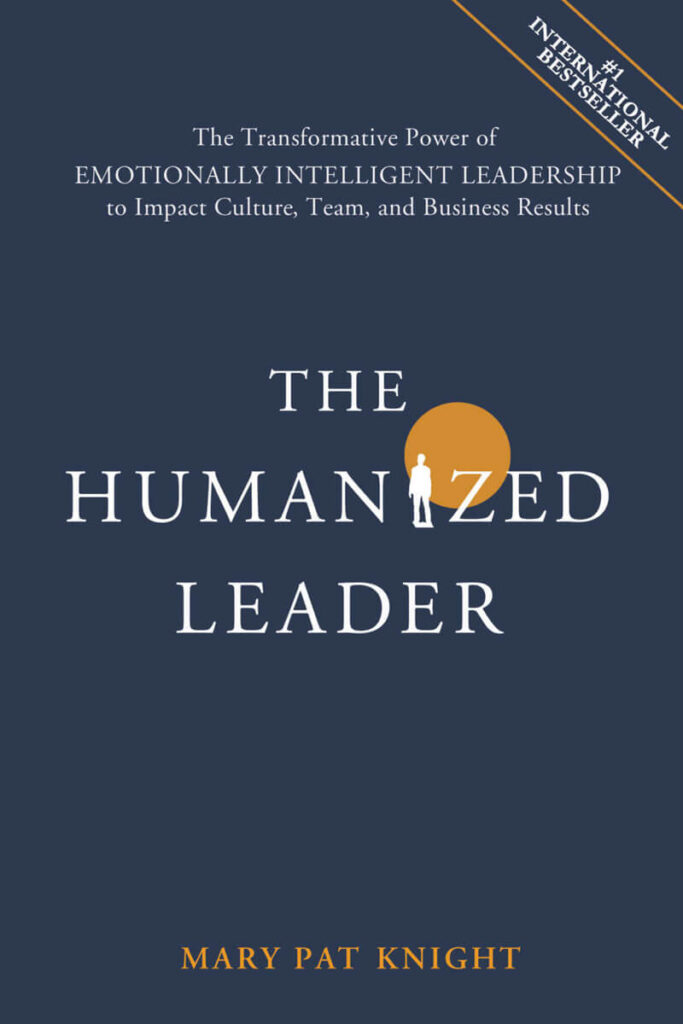
Mary Pat Knight is CEO of Leaders Inspired – an executive coaching and consulting agency devoted to the development of emotionally intelligent leaders. She is also the author of the Amazon #1 International Best Selling book, The Humanized Leader.
The ground-breaking new book, The Humanized Leader: The Transformative Power of Emotionally Intelligent Leadership to Impact Culture, Team and Business Results, is now available in Kindle, paperback, or as an audiobook. To get your copy – or extras for your team, click the button below.