

The Extinction Burst
What happens when you stop rescuing, and why it gets worse first.
He’s sitting in his truck at 6:40 in the morning, parked where he can see the crew, but they can’t see him, watching a scheduling problem unfold that he could fix with one phone call. Two weeks ago, he would have already made it. His hand is actually on the door handle. He doesn’t open it.
For the better part of a year his whole value to that team was being the guy who answered. Somebody hit a snag, they called him, he solved it, everybody went back to work. Fast. Efficient. He looked like a hero, and it felt like leadership. It was also the reason nothing on that jobsite got better without him standing on it.
Our coaching conversations had surfaced the hero pattern, and he recognized it in himself. Reflecting on long term impact on both his capacity and the team’s future capability, he stopped. He told the crew leads directly: bring me the problem and your plan, not the problem without your accountability for a solution.
What happened next seems counterintuitive.
It didn’t get calmer. It got worse. A crew lead who’d never once questioned him started pushing back in front of the group. Small decisions that used to take five minutes started taking two days because nobody would commit without him signing off. One guy said, more or less, that he didn’t understand why he was even on this team if the boss wasn’t going to tell him what to do.
That line is the whole article, honestly. I don’t know why I’m here if you’re not going to tell me what to do. Say that sentence slowly and you can hear a hundred years of management theory collapse into it.
Here’s what I told him, and what I’d tell you if you’re in the truck right now with your hand on the door handle.
When you stop rescuing, the system doesn't say thank you. It escalates.
Behavioral scientists have a name for this. It’s not a metaphor; it’s the literal mechanism:
The Extinction Burst.
When a reward that’s been reliably delivered suddenly stops, the behavior that used to earn it doesn’t fade easily. It spikes and gets louder, more frequent, more desperate, right before it drops off. A kid whose tantrum has always gotten him picked up will tantrum harder the first time it doesn’t work, not less hard. Your team is doing the exact same thing, and they’re not doing it because they’re weak or manipulative. They’re doing it because the old system worked, reliably, for a long time, and a system under threat fights to survive.
If you don’t know this is coming, you’ll read the pushback as proof you made the wrong call. You’ll read the guy questioning you in the meeting as a discipline problem instead of what he actually is, which is a person whose entire operating model just got pulled out from under him with no warning. You’ll cave. Most people cave right here, at the worst possible moment, because caving makes the noise stop immediately and holding the line makes it worse before it makes it better.
My client didn’t cave. Not because he’s braver than you. Because I’d told him, three sessions earlier, exactly what this would feel like and exactly when it would happen. He knew the spike wasn’t the failure. The spike was the evidence that the change was real.
What holding the line actually looks like, in practice:
It’s not a speech. It’s not a memo about the new way we do things. It’s small, repeated, almost boring moments where you get asked to solve something and you don’t. You ask instead:
- What have you tried?
- What's your read on it?
- What would you do if I weren't in the room?
And then—the hard part—you let the silence sit there while they figure out you mean it.
“One guy essentially said: I don’t understand why I’m even on this team if you aren’t going to tell me what to do.” He came back two weeks later with a plan he’d worked out himself for a problem he would have handed off without a second thought a month earlier. He didn’t say thank you. He didn’t need to. The plan was the thank you.
The extinction burst isn’t a sign you’re doing it wrong. It’s the cost of doing it right, charged up front, before any of the good part shows up.
If you’re in this right now, in the loud, ugly middle of it, here’s the only question that matters: are you willing to let it get worse before you find out if it gets better? Because it will get worse first. Every single time. That’s not a bug in the plan. That’s the plan working.
What’s the version of this you’re living through right now, the moment where stepping back felt like it was breaking something instead of fixing it?
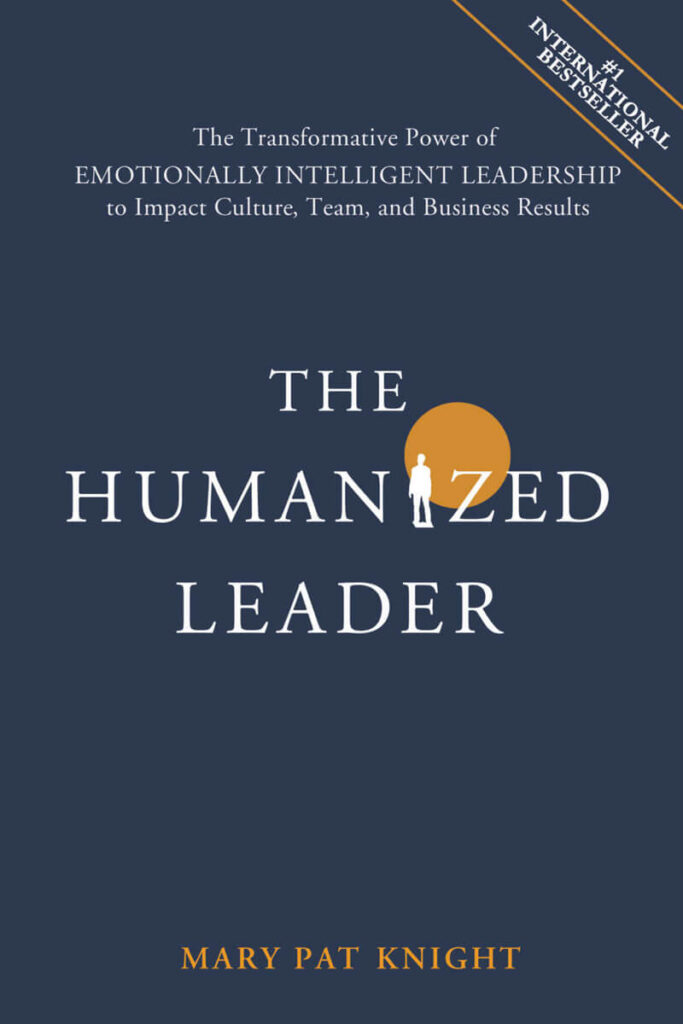
Mary Pat Knight is CEO of Leaders Inspired – an executive coaching and consulting agency devoted to the development of emotionally intelligent leaders. She is also the author of the Amazon #1 International Best Selling book, The Humanized Leader.
The ground-breaking new book, The Humanized Leader: The Transformative Power of Emotionally Intelligent Leadership to Impact Culture, Team and Business Results, is now available in Kindle, paperback, or as an audiobook. To get your copy – or extras for your team, click the button below.