

Rewiring the 1:1
Three rules to rewire your 1:1s and build a more capable team.
Remember the construction company integrator from last week’s article? The one who stopped getting out of his truck to fix things? He told me something a few sessions later that stuck with me. He said the hard part was never deciding to stop rescuing.
The hard part was the 1:1. It was sitting across from someone for forty-five minutes, live and in real time, with no truck to hide in, and resisting the urge to just tell them what to do.
It’s where coaching theory collides with an actual human waiting for your advice.
Most leaders never rewire their 1:1s. They open with “how’s it going,” ask leading questions they already know the answers to, and immediately jump in the second there is a pause. The intention might be coaching, but the structure is still just telling.
Here is what it actually looks like to rebuild the conversation:
Rule 1: Stop asking questions you already know the answer to.
“Did you finish the Peterson bid?” isn’t a coaching question. It’s a status check wearing a question mark. If you already know what you want to hear, you’re not asking; you’re auditing. Your team senses that instantly, which is why the meeting feels hollow.
Rule 2: Ask questions that require them to do the thinking.
With my client, the shift looked like this.
- Old version: "You need to call the sub and push the schedule."
- New version: "What are your options here, and what's the tradeoff for each?"
The second question is slower, but it’s the only one that builds a person who can solve the problem next time without you in the room.
Since we are addressing questions in Rule 2, here are five questions that move someone into their own autonomy:
- What have you already tried? This kills the rescue reflex immediately. It puts the burden of the first move back on them before you've offered a single solution.
- What's your read on why this is happening? You want why, not what. The first is a status report. The second requires analysis, which is a muscle the Victim mentality doesn't normally use.
- If I weren't in the room, what would you do? This usually creates an uncomfortable silence. Let it sit. Don't rescue them from it.
- What's the cost of doing nothing here? Sometimes the honest answer is "not much," and that's useful information. You're teaching them how to weigh urgency and consequences for themselves.
- What do you need from me, specifically, to move on this? Not "how can I help?" which just invites them to hand the problem back to you. This forces a specific, proactive ask.
Rule 3: Let the silence do the heavy lifting. This is where most leaders fail. You ask a great question, they don’t answer immediately, and your every instinct screams to break the tension, offer an example, and rescue them from the discomfort.
Don’t. Those eleven seconds of silence are the actual coaching. That is the exact moment the other person’s brain switches from “wait for the answer” to “produce one.” Interrupting that silence is the easiest way to quietly turn a coaching session back into a telling session.
My client told me that the first time he really held a silence like that, it felt physically wrong. It was like watching someone fall and refusing to catch them. But he waited. And forty seconds later, the guy across from him came up with a better plan than the one he was about to hand down.
That’s the playbook: Fewer answers from you. Better questions. Silence you don’t fill.
None of this is complicated to write down. It’s brutal to actually do in month one, sitting there with your mouth shut while every instinct that got you promoted is telling you to just solve it already. But it’s the only conversation where the other person leaves more capable than they walked in, and that’s the whole point of the job.
Before your next 1:1, ask yourself: Am I about to hand them an answer, or give them the room to find one?
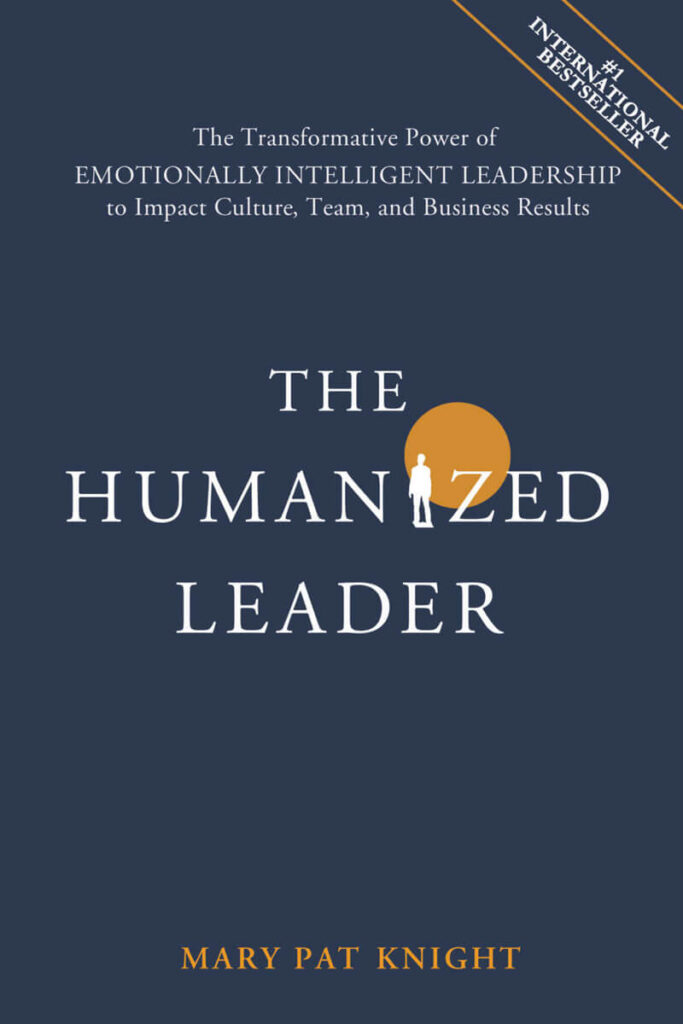
Mary Pat Knight is CEO of Leaders Inspired – an executive coaching and consulting agency devoted to the development of emotionally intelligent leaders. She is also the author of the Amazon #1 International Best Selling book, The Humanized Leader.
The ground-breaking new book, The Humanized Leader: The Transformative Power of Emotionally Intelligent Leadership to Impact Culture, Team and Business Results, is now available in Kindle, paperback, or as an audiobook. To get your copy – or extras for your team, click the button below.