

Lax or Spacious
The Stillness That Actually Does the Job
I was apartment hunting recently in the middle of a chaotic quarter. It was the only time I had, which is how these things usually go.
I had a ten-day vacation on the calendar. Instead of looking forward to it, I was treating the trip like a logistical failure. It was ten days carved out of a search that felt incredibly urgent. I wouldn’t be able to watch listings, make calls, or run mental negotiations. So, I did what I often do when the ground shifts. I tightened my grip. That is control. It feels busy and entirely justified. It convinces you that the very next action will finally settle the score.
I know this pattern. The what-ifs multiply and contingency planning starts looking like strategy. The controlling voice inside is always sensible and articulate. It tells you to do more and push harder. It certainly leaves nothing to chance. Underneath it all is the delusion that if you just work the problem hard enough, you can concoct certainty. This type of urgency is grasping and clutching and does little but produce anxiety.
Before I left, I had a blunt conversation with myself to put the urgent energy down. I said out loud that I was willing to trust that whatever was meant for me would show up. This is strategic surrender.
The controlling voice hated that.
Then the second temptation showed up. The reaction to just quit caring entirely. To stop the search in my head and assume it would work out without me. From the outside, that looks like peace. From the inside, ego judged it as just giving up, listless and untethered. When you check out, the responsibility is dropped rather than owned or even shared. This is throwing in the towel.
I chose neither. I kept my feet on the ground.
Funny enough, in the frantic days right before my trip, the right place showed up, complete with a messy one-month gap between leases that required its own negotiation. I said yes. In that same chaotic window, a second opportunity appeared, and I threw my hat in as a hedge. It went to someone else. I was genuinely fine with it.
That last part is the actual proof of concept. Not that things worked out. (First, they usually do when you stop strangling them. Second, they usually do when you are the hands to spirit’s whisper.) The win was that I could hold the outcome loosely before I even left. That isn’t apathy. It is the most active thing I did during the whole ordeal. It was a sudden, practical understanding of what it means to “wear the world like a loose garment.”
I am not telling you this because apartment hunting is a profound leadership lesson. I am telling you because I almost missed it. The part of me that knows how to be spacious had to fight two other internal factions. The one that wanted to micromanage the universe, and the one that wanted to quit and call it peace.
The Executive Identity Crisis
I am not the only one who deals with this struggle. I sat across from a client recently who is wrestling with the exact same friction.
He has spent eight years moving from a man who owned a business to a genuinely wise, sharp, humble CEO. He did the hard work. He built a killer team, stepped out of the daily chaos, and learned to let them do their jobs. He earned his calm.
But with the daily firefighting gone, he suddenly found himself with a calendar full of empty space. During our coaching call, he looked at me and asked a remarkably honest question. He wasn’t anxious, just genuinely curious: “Am I being lax, or am I just enjoying spaciousness?”
When you build a machine that finally runs without you, the sudden silence can feel a lot like neglect.
That conversation stayed with me because from the outside, checking out may look like abdicating when it might truly be wisdom.
It sounds like a nuance. It isn’t. There are three positions available to you when things get quiet. Only one of them is actually doing the job.
Control is loud. It mistakes raw activity for progress and anxiety for competence. It isn’t always wrong, because some crises require a heavy hand. But for a seasoned leader, it is usually a regression. Pressure hits, the landscape gets complicated, and old reflexes take over. Control feels like leadership. Most of the time, it is just fear with executive presence.
Lax is the other side of the equation. It has a low-grade sense of a job left undone. Lax is a temporary pause that became permanent. It is drift. Looking like patience, it is actually a leader who has lost their footing. The old toolkit doesn’t fit the new level of the business. Instead of sitting in the discomfort of not knowing, they settle into a state of permanent hesitation. A lax leader has put the burden down without realizing they did it.
Spaciousness is the most strenuous of the three. It requires you to hold an issue open on purpose. You have to stay fully aware without giving yourself the relief of fixing it or walking away. Spacious leaders ask harder questions. They understand that time expands for all good things. They let their people stumble and find their own footing before rushing in with answers. Silence becomes a deliberate act. This is engagement at an entirely different frequency.
The Diagnostic
The tricky part of earning your calm is that it gives you cover for all three states. When you were a reactive manager, everyone saw the damage. When you are developed enough to be still, the truth is harder to see.
Here is the diagnostic I trust. Every wise leader knows the low, persistent internal hum that something important is being avoided.
Control silences the hum by staying in motion. Lax has simply stopped listening to it. Spaciousness sits with the noise and refuses to flinch.
When you are being spacious, you know what you are waiting for, even if you can’t name the date it arrives. There is intention under the quiet. You can answer the question: What am I holding, and why? Even if the answer is just, I don’t know yet, but I am paying attention. When you are lax, that same question triggers guilt. “Not yet” is starting to sound a lot like “never.”
The discomfort of spaciousness is what defines it. Control feels good because you are moving. Lax feels good because you are coasting. Spaciousness is uncomfortable in a way that feels exactly right. You are keeping a door open that every reflex wants to slam shut.
The leaders I respect most don’t beat themselves up for the days they micromanaged or the weeks they drifted. They just stay honest about the room they are currently standing in.
You built your calm. You earned it. Just make sure you know what you are doing with it.
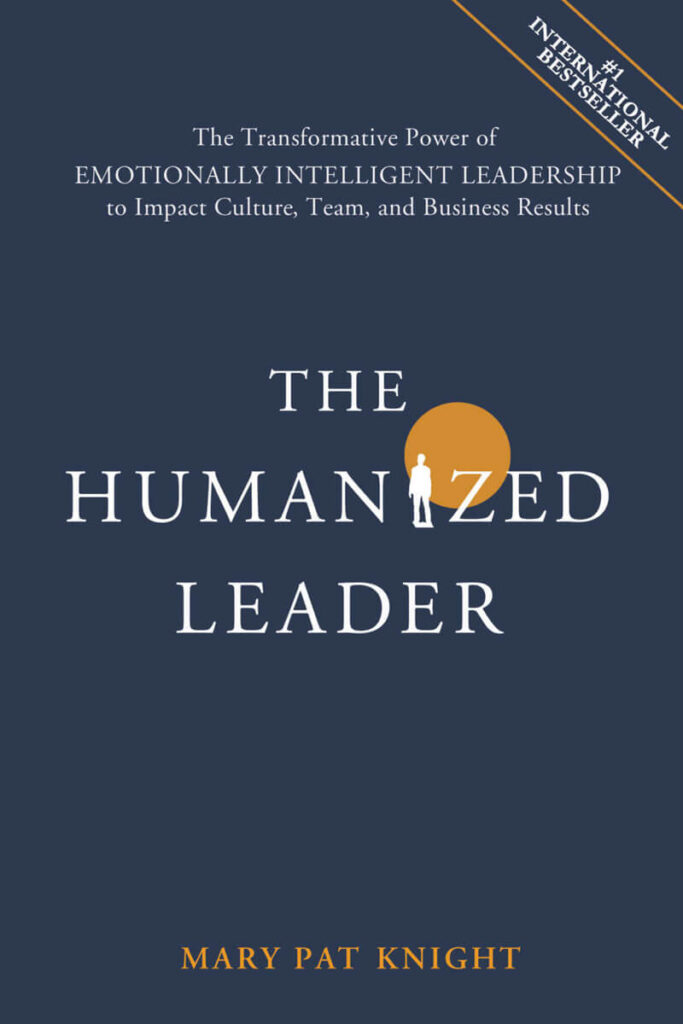
Mary Pat Knight is CEO of Leaders Inspired – an executive coaching and consulting agency devoted to the development of emotionally intelligent leaders. She is also the author of the Amazon #1 International Best Selling book, The Humanized Leader.
The ground-breaking new book, The Humanized Leader: The Transformative Power of Emotionally Intelligent Leadership to Impact Culture, Team and Business Results, is now available in Kindle, paperback, or as an audiobook. To get your copy – or extras for your team, click the button below.