

The Cost Nobody Names
The hidden toll of holding space, checking out, and leading alone.
The Cost of Staying In
The first cost is the one developed leaders know best, even if they rarely say it out loud: the price of doing the work well. It is the toll of remaining present, regulated, and clear when a situation is pulling hard in the opposite direction.
Emotional labor isn’t soft. It is among the most demanding work a leader does, and because it leaves no visible residue, it is incredibly easy to dismiss and hard to recover from. Nobody sees the internal effort it takes to stay calm in a room that wants to escalate, or to choose curiosity over defensiveness when an attack feels personal. The output looks effortless. The input is anything but.
The trap is the exact one I fell into early on. When depletion becomes a badge of honor, a leader stops managing it and starts feeding it. The exhaustion becomes their identity. A leader whose identity is built on how much they can carry will always find reasons to keep holding on, long past the point where it serves anyone.
The Cost of Checking Out
The second cost is less visible and far more dangerous. It is what happens when a leader stops staying in—not all at once with an announcement, but gradually, through small withdrawals that accumulate into absence.
It looks like a shorter response than a situation deserved. A crucial conversation deferred past the point of doing any good. A decision left floating because the leader was simply too worn down to hold the weight of it for one more day.
When a leader checks out from weariness, fear, or the entirely reasonable human desire to stop carrying so much, the team doesn’t experience it as rest. They experience it as a dropped signal. In the absence of a clear signal, people write their own stories—and those stories are almost never generous.
Confusion moves in. Anxiety fills the vacuum. The team reads the absence and assigns it a dark meaning: Something is wrong. Something is being withheld. Something has shifted and nobody is telling us. The leader who checked out to protect themselves inadvertently creates the very instability they were trying to avoid.
The cost of showing up fully is high. The cost of checking out is higher, and the team ends up paying the bill.
The Price of Solo
The third cost belongs to the leaders who are doing the work exceptionally well, but doing it entirely alone.
I see this often. A leader has developed genuine capacity; they have learned to regulate, hold, and stay, but they have absolutely no place to put any of it down. They have no peer who understands the terrain, no relationship that can hold the weight of what they absorb, and no practice for depositing the stress before it calcifies.
These leaders usually look like the steadiest people in the room. And they are. But steadiness maintained in isolation compounds a dangerous interest. The weight doesn’t disappear just because you are strong enough to carry it. It accumulates because you are strong enough not to put it down.
The higher your capacity, the easier it is to go long stretches without the honest, reciprocal conversations that actually restore you. Competence can be its own isolation. A leader who has been carrying the room for years without a place to set it down is not resilient. They are simply running on borrowed time.
Eyes Open
None of this is an argument against doing the work. It is an argument for doing it with your eyes wide open.
A leader who understands these invisible costs—who names them, budgets for them, and builds recovery into the structure of their weeks—is not fragile. They are sustainable. They know exactly what they are spending, they know when the account is running low, and they recognize the difference between a moment that calls for more and a moment that is calling for something else entirely.
The work is real, and the cost is real. The leaders who stay in the game the longest are never the ones who pretended it was free.
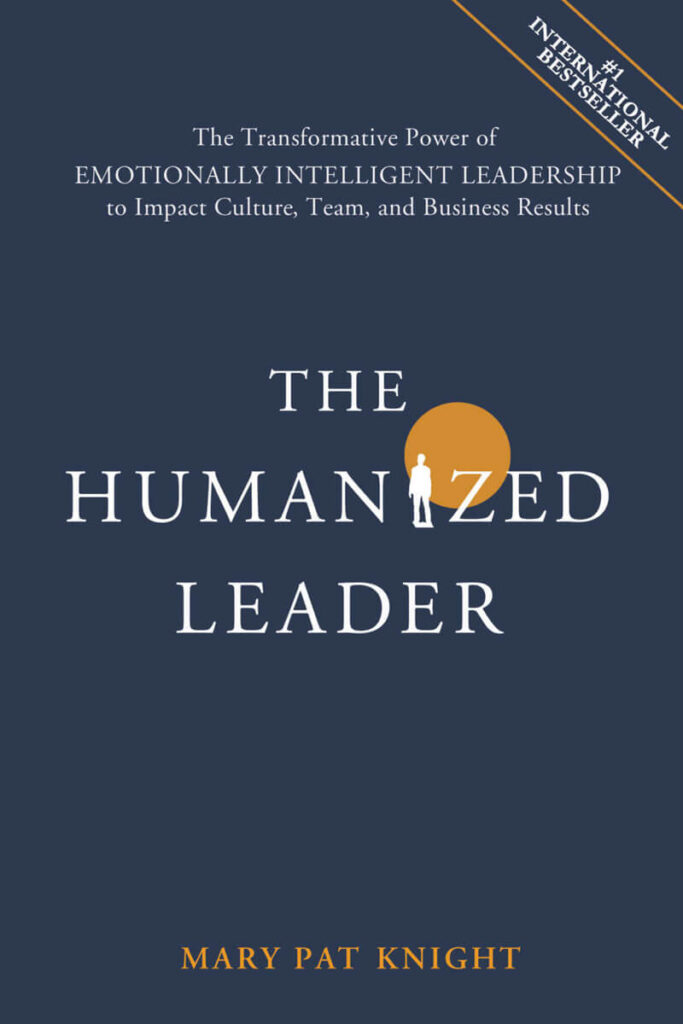
Mary Pat Knight is CEO of Leaders Inspired – an executive coaching and consulting agency devoted to the development of emotionally intelligent leaders. She is also the author of the Amazon #1 International Best Selling book, The Humanized Leader.
The ground-breaking new book, The Humanized Leader: The Transformative Power of Emotionally Intelligent Leadership to Impact Culture, Team and Business Results, is now available in Kindle, paperback, or as an audiobook. To get your copy – or extras for your team, click the button below.