

What Is Yours to Hold?
How high-capacity founders stop fixing everything and let their teams lead.
I sat across from two business partners recently. They have spent the last few years growing their firm fast, and they have grown tremendously as leaders along with it. I have watched them find their footing, trust their individual voices, and learn how to navigate each other with real maturity.
But during this particular session, they were just flat-out tired.
Rapid growth brings a lot of messy moving parts. They were facing the classic scaling pains that hit every successful company, like trying to get the right people into the right seats and keeping team drama from stalling out their momentum. Because these partners care so deeply, their instinct was to step in and personally fix the temperature in every single room.
I listened to them map out the chaos. Then I asked them one simple question.
“What is yours to hold?”
We sat with that for a moment. When you are a high-capacity founder who has successfully driven a business to a new level, your default reflex is to catch everything that drops. If a project hits a snag or a team member gets overwhelmed by their new targets, your impulse is to rescue them. Your past success has convinced you that this hands-on fixing is what good leadership looks like.
It isn’t. It is just doing someone else’s job for them.
The Trap of High Capacity
When you hold what does not belong to you, you steal your team’s opportunity to grow. It is the classic hero pattern.
There is a real fear that drives this behavior. It is the fear of watching things get messy or slow down. You see a project stumbling or a conflict brewing, your stomach tightens, and the old founder reflexes take over. To keep things moving, you step in and make the decision yourself. You rewrite the plan or smooth over the internal tension.
You think you are protecting the business. What really happens is that the confidence of the very leaders you are trying to build up gets diminished.
Every time you rescue, you ensure they stay dependent on you. If your team realizes that you will always carry the emotional weight of their performance gaps, they will happily let you do it. This creates a wobble in the culture of accountability that you long for.
This is where your wise, calm voice belongs. Not in solving the problem, but in drawing a clear line between your job and theirs. You are responsible for setting the standard and providing the tools. You are not responsible for managing their anxiety about meeting that standard.
The Boundary of Scale
This is hard internal work. It is the exact shift required to move from a hands-on operator to a leader who actually has time to think and be responsive.
Look at your current calendar and run a quick check. How many of the issues keeping you awake at night actually belong to the people who report to you? If your team is coasting while you are agonizing over their deadlines, the math is broken.
You have to learn to sit with the discomfort of watching a team member struggle without rushing in to save the day.
When a manager comes into your office looking for a rescue, don’t rush to fix it. You can offer guidance and perspective without taking the heavy lifting onto your own shoulders. Ask them what they plan to do about it. Then, let them leave the room with the responsibility still in their hands.
This shift feels incredibly uncomfortable if you have spent years being the chief problem solver. The internal voices will tell you that you are being distant, or that the work will suffer if you don’t jump in.
Let it feel uncomfortable. That friction is just the feeling of your organization growing up.
The Clean Hand-Off
The leaders who build sustainable, healthy businesses learn the discipline of the clean hand-off. They know exactly where their skin in the game ends and the employee’s ownership begins.
They place the ball firmly in the correct lap, and then they step back to let their people lead.
If a team member fails, that is just clear feedback. It tells you something. Process or people? Is someone in the wrong eat or lacking capability. Is a process unclear or cumbersome? You will never get that clear picture if you keep hovering underneath them like a safety net.
Look at the messes you are refereeing this week. Ask yourself the question before you open your mouth to solve it.
Mary Pat Knight is CEO of Leaders Inspired – an executive coaching and consulting agency devoted to the development of emotionally intelligent leaders. She is also the author of the Amazon #1 International Best Selling book, The Humanized Leader.
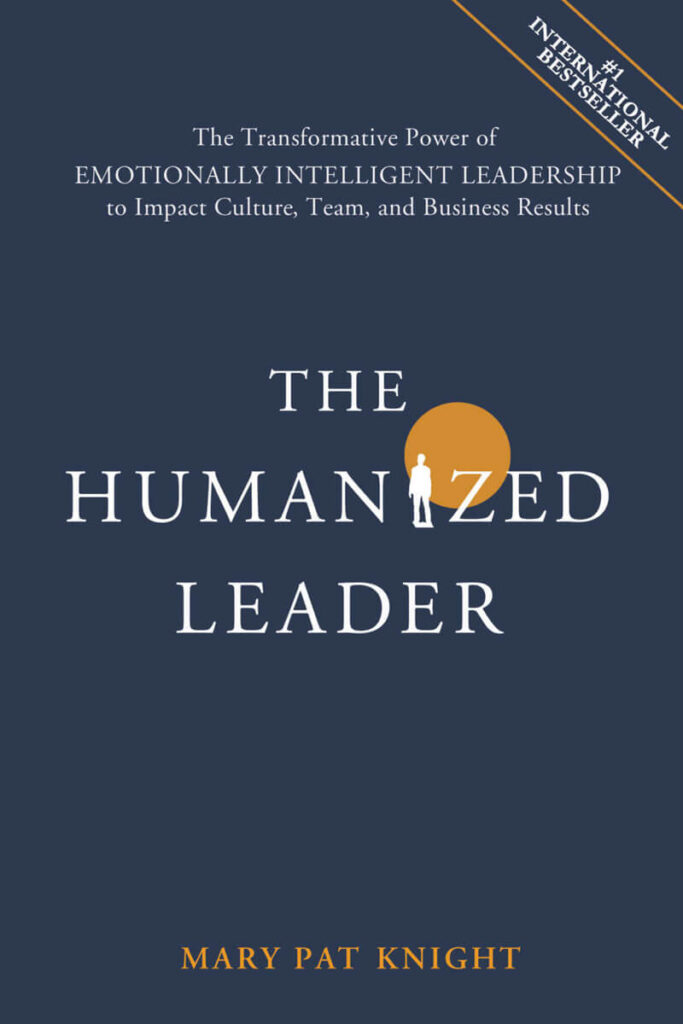
The ground-breaking new book, The Humanized Leader: The Transformative Power of Emotionally Intelligent Leadership to Impact Culture, Team and Business Results, is now available in Kindle, paperback, or as an audiobook. To get your copy – or extras for your team, click the button below.