

What Keeps the Hero in the Role
What your helping has actually been doing
My daughter is capable. I have always known this. I have said it out loud, written it in cards, meant it completely. And then I walked into the kitchen while she was figuring something out and fixed it, because I could see the faster path and the hour was late and there were other things still waiting. I told myself it was efficiency. I told myself it was love.
She didn’t argue. What I got instead was a kind of removal. She did not leave the room, but she stopped interacting with the problem. She waited. And somewhere underneath the waiting was resentment.
Without malice, she temporarily closed the door on the relationship. There was nothing dramatic about it. It was more like she had learned that proximity to this dynamic costs something and decided to stop paying it. I do not think she did it consciously. I think it was protection. It was the most honest feedback I ever received about what my helping had actually been doing.
She had stopped being able to occupy her own space. I was the one who had taken it. One small rescue at a time.
This is the pattern leadership writers rarely admit: the hero does not create incapable people. The hero creates the conditions under which capable people stop demonstrating their capability. Those are not the same thing. If they were struggling, I was helping. But if they were capable and I stepped in anyway, the verdict I handed down was that they could not get there fast enough. What I did was closer to theft. I took the “rep.” I took the struggle that would have built something. I took the small failure that would have taught more than my solution ever could.
I did it because the environment made it easy. And the unconscious rules of leadership told me there was always a reason. Pace, stakes, efficiency, speed. When you see the answer, and someone else is still searching, your instinct is to move. The hero does not persist because leaders are ego-driven. The hero persists because the environment keeps making the case for intervention.
The question nobody asks is what the environment is getting from you in return.
I have learned this from the coaching room, my own kitchen, and the accumulation of moments where I finally caught myself before I moved: the cast does not assemble itself. Victims and villains are not just happening around the hero. The hero’s behavior is part of what keeps them in those roles. When I step in before my daughter finishes trying, I am not responding to her incapability. I am producing it. When a leader tells instead of asking because telling is faster, the team learns to wait for the answer. That waiting is not a character flaw. It is a learned response to a consistent signal.
The signal is: I don’t trust what you’d arrive at on your own.
Most heroes never send that signal consciously. They send it through patterns. They send it through the speed of the intervention and the thousand small moments that add up, over time, to a verdict.
The Drama Triangle has three roles: Hero, Victim, and Villain. No one holds a fixed position, and what sustains the system is not the people in it. It is the way each role justifies the other two. The hero I am writing about here is the one who looks most like leadership, which is why this role gets the least scrutiny.
What breaks the triangle is not effort. It is perception. It is how I see and believe about the other person.
When you can see the person in front of you as a Creator, someone with capacity rather than a deficit, the rescue has no object. When you can see the difficult colleague not as an obstacle to manage around but as someone running their own pattern for their own reasons, the villain dissolves. The triangle doesn’t collapse because you decided to do less. It collapses because the cast changed in your eyes, and the hero has no role to play in a room where no one needs saving.
You cannot unsee a need once you have learned to look for it. Before developing self-awareness about this pattern, that belief stays hidden. Once you understand that stepping in before someone finishes trying is suppressing their autonomy, not helping them, not being efficient, but actively taking something from them, you cannot go back to the comfortable story. The awareness begins to arrive sooner. With practice, it arrives early enough to stop the movement before it starts.
Catching yourself before you fix it, even when you see the faster path and the hour is late, is one of the hardest leadership moves there is. It is not hard because it requires effort. It is hard because it requires you to stay still while someone else does the work of becoming.
Stepping back is not abdication. It is holding the space open instead of filling it. It is trusting the process over your own efficiency and choosing their development over your relief.
My daughter does not wait the way she used to. That changed and largely because I changed first. I learned to see what the doing was costing her. The awareness came late, then it came sooner, and now sometimes it arrives before my feet move.
The difference is that now I ask first. Do you want a hand with this, or do you want to work it through? That question does something the intervention never could. It returns the choice to her. It says I see you as someone who gets to decide what you need, not someone whose need I have already assessed from across the room. Sometimes she says yes. Sometimes she says no. Either answer is the right one because it is hers.
That is the move. It is not a withdrawal. It is asking first, and meaning it when you ask. That means being willing to stay still if the answer is no.
This is not a problem I have solved. It is a question I live inside and the one I ask of my clients. What am I doing, right now, that keeps this triangle intact? What signal am I sending that tells a capable person to wait for me instead of trusting themselves?
I don’t always catch it in time.
But I know what I’m looking at when I don’t.
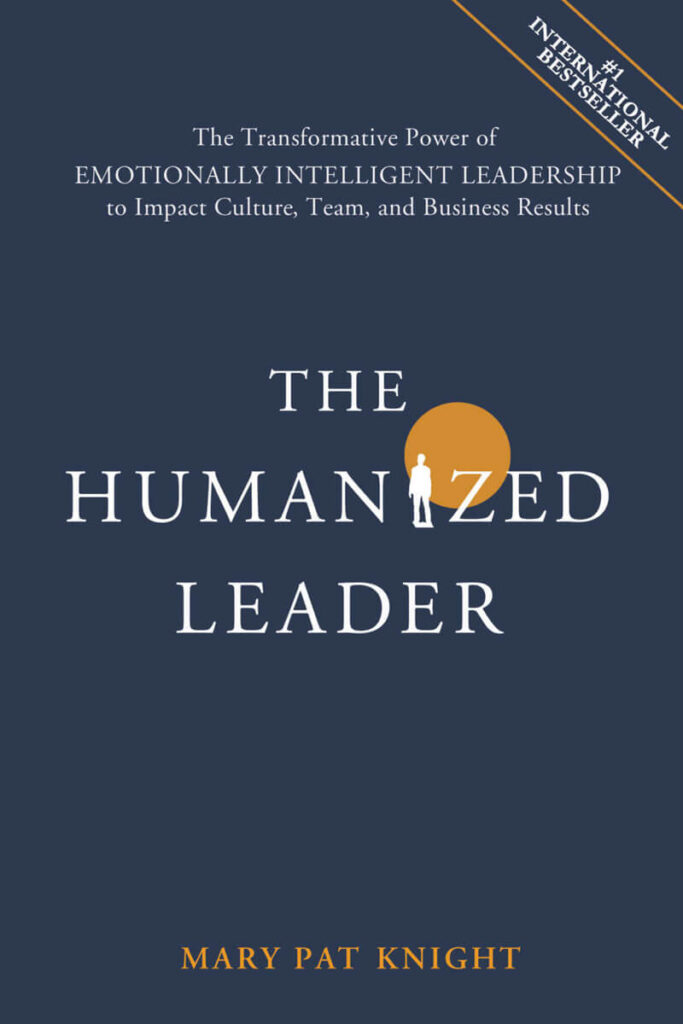
Mary Pat Knight is CEO of Leaders Inspired – an executive coaching and consulting agency devoted to the development of emotionally intelligent leaders. She is also the author of the Amazon #1 International Best Selling book, The Humanized Leader.
The ground-breaking new book, The Humanized Leader: The Transformative Power of Emotionally Intelligent Leadership to Impact Culture, Team and Business Results, is now available in Kindle, paperback, or as an audiobook. To get your copy – or extras for your team, click the button below.