

When Even the Best Plans Need Room to Breathe
“The best-laid plans of mice and men oft do go astray.”
— Robert Burns
I’ve always liked that line, not because it’s cynical, but because it’s honest.
It reminds me that no matter how thoughtful or well-intentioned we are, leadership rarely unfolds in a straight line. Conditions change, information evolves, and people respond in ways we couldn’t have predicted. Even the best plans sometimes need to be held with more openness than we’d prefer.
That’s part of what I’ve been circling around this month.
So much of leadership right now is a practice of balance. The balance between steadiness and decisiveness. Between having a point of view and staying open. Between moving forward and knowing when to pause long enough to see what’s actually true.
This isn’t theoretical. It shows up in real decisions, real consequences, and real relationships. It’s mature leadership work, and it asks us to draw on the full range of our emotional intelligence.
What I’ve noticed is that when things feel uncertain, most of us lean more heavily into our natural tendencies. Maybe you are the leader who pushes forward quickly, wanting clarity and momentum. Others slow things down, wanting stability and consensus. Some of us seek more data and proof before acting. Others rely on instinct and energy, trusting that movement itself will create clarity.
None of these approaches are wrong.
They simply come with different strengths, and different blind spots.
If you’re familiar with DiSC, you might recognize this pattern. Some leaders are naturally more decisive and action-oriented. Others bring vision and optimism. Others steady the field by attending to people and impact. Others slow things down with precision and thoughtfulness.
Each style contributes something essential. And each can become distorted when fear or urgency starts driving.
I often remind leaders to honor their strengths, and to pay attention when a strength becomes overused. Our strengths can turn into liabilities when we grip too tightly. Under stress, they don’t disappear. They intensify. Decisiveness can harden into force. Caution can slip into paralysis. Optimism can drift into avoidance. Thoughtfulness can turn into overcontrol.
That’s where awareness matters.
Steady leadership doesn’t mean rigid leadership. And decisive leadership doesn’t mean inflexible leadership. The leaders who seem to navigate uncertainty best are not the ones with the most certainty, but the ones with the most self-awareness.
They hold plans firmly enough to act, and lightly enough to adjust.
They’re willing to say, “This is the best decision I can make with what I know right now,” without pretending it’s the final word. They stay engaged with reality as it unfolds, rather than defending a plan at all costs.
This, to me, is where emotional intelligence becomes lived leadership. It’s what humanized leadership looks like in practice.
It’s not about abandoning planning or strategy. It’s about recognizing that leadership is a relationship with what’s actually happening, not just what we hoped would happen. It requires presence and humility. And it requires the courage to stay responsive rather than reactive.
As February ends, this is the question I’ve been holding:
How firmly am I gripping my plans?
And how available am I to what’s actually unfolding?
That balance, between steadiness and flexibility, between action and awareness, feels like the kind of leadership this moment is asking for.
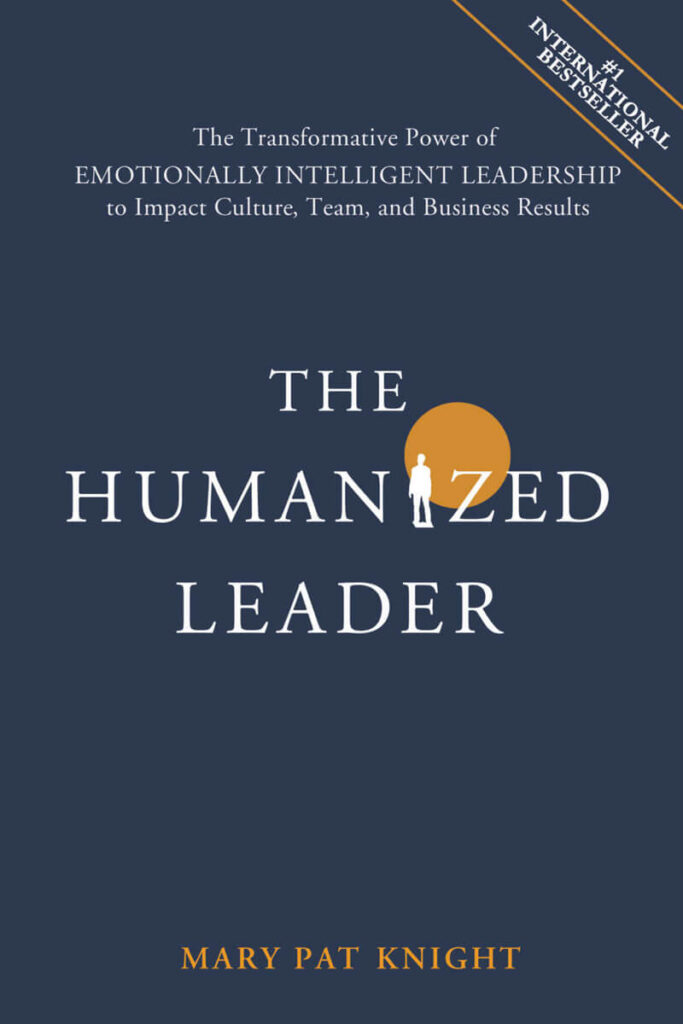
Mary Pat Knight is CEO of Leaders Inspired – an executive coaching and consulting agency devoted to the development of emotionally intelligent leaders. She is also the author of the Amazon #1 International Best Selling book, The Humanized Leader.
The ground-breaking new book, The Humanized Leader: The Transformative Power of Emotionally Intelligent Leadership to Impact Culture, Team and Business Results, is now available in Kindle, paperback, or as an audiobook. To get your copy – or extras for your team, click the button below.




Always thought provoking….spot on! Thank you. This really gives me reason to pause and reflect. Thank you.