

Paying attention is part of responsible leadership. But not all attention strengthens our ability to lead.
I don’t like how quickly my attention can drift toward the spectacle.
It doesn’t take much. A headline, a clip, a message from a colleague, and suddenly I am tracking commentary, analysis, and reaction. It feels like staying informed, even responsible. Yet afterward, I notice that I don’t feel clearer. I feel scattered. Does that feel familiar to you?
What begins as what we think is awareness is really an attention grab. It becomes distraction, and over time that distraction erodes something essential for leadership — our steadiness.
I’m not talking about ignoring what is happening in the world. Paying attention matters. The quality of our attention matters even more.
To what are we paying attention?
There is an attention that sharpens discernment and steadies the nervous system so we can respond thoughtfully. There is another kind that pulls us outward and away from our own center, into commentary, speculation, and outrage. It feels active, but it can leave us untethered.
I’ve caught myself in the “ain’t it awful” loop, sharing the latest factoid before I’ve slowed down enough to ask whether it is complete. I’ve felt the immediate reaction that comes from partial information, and the split second where I either react or pause long enough to choose a more thoughtful response. Reaction is a false flag. It feels energizing in the moment, even bonding. But afterward we are left with fatigue and sometimes an abdication of our own leadership.
That is the part that concerns me.
When we become spectators to a cultural circus, we can begin to confuse watching with leading. With only partial information, we analyze institutions, critique systems, and question the motives of people we will never meet, while the rooms we actually influence wait for our steadiness.
I’ve also seen this closer to home — in workplaces where people watch a problem unfold, discuss it at length, and then walk away from the cleanup. There can be a strange satisfaction in being “in the know” without being responsible for the repair. But leadership does not end at observation.
Spectatorship diffuses responsibility, while leadership concentrates it.
The more I allow myself to be absorbed in the spectacle, the more I can feel my attention scatter and my inner state shift. Decisions start to feel heavier, and conversations often carry a charge before they’ve even begun.
In that state, it becomes harder to access the very qualities I say matter most: neutrality, discernment, accountability, and clarity. My leadership narrows without my realizing it.
Voyeurism, in this sense, disconnects us from ourselves. And when we are disconnected from ourselves, leading self becomes more difficult, and leading others becomes reactive rather than intentional.
This is not a call to disengage. It is a call to notice.
Notice where your attention rests and what it does to your body. Notice whether it sharpens your capacity to lead the people in front of you, or whether it pulls you into commentary about forces beyond your control.
The leaders I trust most right now are not the ones with the strongest opinions about the spectacle. They are the ones who return, again and again, to their own sphere of influence. They ask what theirs is to steward. They train their next-level leaders in discernment. They hold conversations that build clarity rather than increase outrage.
At a time when institutions feel unsteady, it is tempting to become a watcher. It feels safer and more informed. But leadership is not watching. Leadership is modeling steadiness in the spaces we actually inhabit.
I’ve been asking myself a simple question:
What would change if I gave more attention to the room that I am responsible for rather than to the stage I am merely observing?
That question alone has begun to shift my energy.
Perhaps it is one worth sitting with.
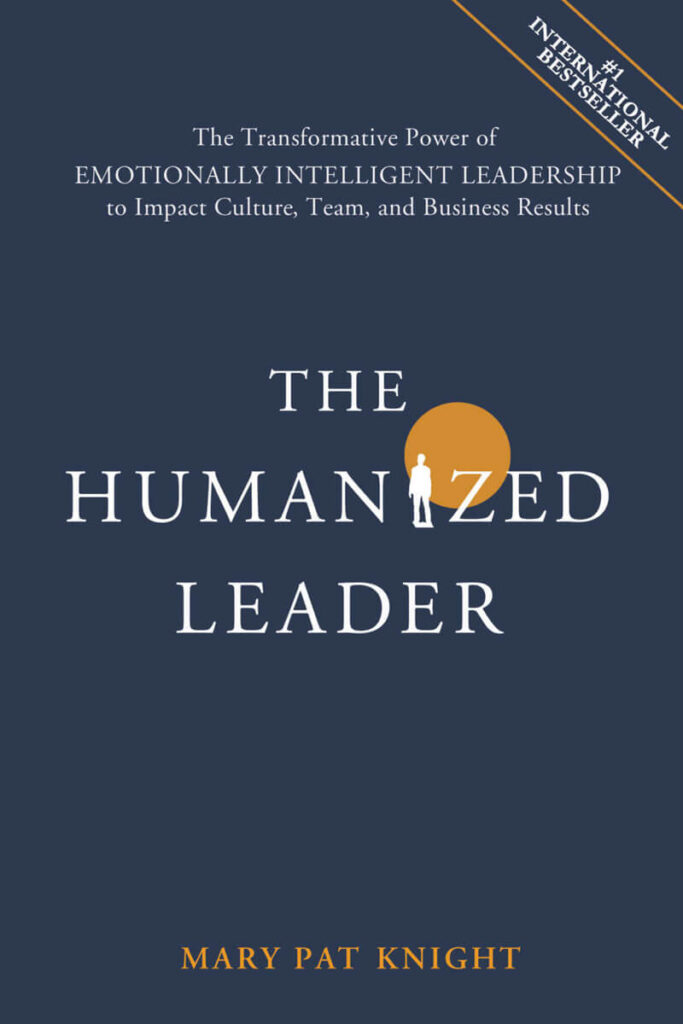
Mary Pat Knight is CEO of Leaders Inspired – an executive coaching and consulting agency devoted to the development of emotionally intelligent leaders. She is also the author of the Amazon #1 International Best Selling book, The Humanized Leader.
The ground-breaking new book, The Humanized Leader: The Transformative Power of Emotionally Intelligent Leadership to Impact Culture, Team and Business Results, is now available in Kindle, paperback, or as an audiobook. To get your copy – or extras for your team, click the button below.