
When Discernment Requires You to Slow Down
Discernment Begins with FDNK
Over the years, one of the simplest organizing principles I’ve taught is four words:
Factual. Direct. Neutral. Kind.
If you’ve been around my work for a while, you know the acronym: FDNK.
It’s not just a communication tool. It’s a leadership state. It is a way of being grounded enough to see clearly, speak cleanly, and stay out of unnecessary reactivity.
FDNK is what helps us lead without distortion.
And what I’ve come to understand more deeply is this: when we lose neutrality, we usually lose the facts right after. When we lose kindness, we often become sharp or controlling. When we lose all of it, we call it decisiveness, but it’s often something else.
It’s reaction.
This is where discernment comes in.
Discernment is often defined as the ability to judge well. And in leadership, judging well depends on something quieter than intelligence or experience.
It depends on emotional state. FDNK – Each of the four words imply a decision about how we want to be.
In the fast pace of today’s leadership, we ask constantly, What should I do?
But the more important question might be:
From where am I deciding?
Because when the stakes feel real, and emotions are involved, it’s easy to believe we are seeing clearly, when in fact we are seeing selectively. The decision may look rational on the surface, but underneath, it may be rooted in fear, urgency, or a triggered nervous system.
FDNK is what keeps us from deciding from that place. It helps us decide how we “be”.
Our nervous system has to be settled enough to actually take in what’s true. And that ability disappears quickly when we’re activated.
Facts feel solid—until they aren’t.
I saw this in myself not long ago.
I had a strong reaction to a situation involving someone I care deeply about, and I was convinced I understood exactly what was happening. I felt certain. I justified my quick anger.
What I couldn’t see at the time was how narrow my vision had become. My reaction filtered what I could and could not take in.
The facts were available. I just couldn’t access them.
Discernment was blocked.
That experience reminded me how fragile FDNK can be under pressure.
In the world we’re living in right now, what we call “factual” often has less to do with what’s actually happening and more to do with how reactive we are in the moment. When neutrality disappears, facts don’t simply blur. They reshape themselves around fear, protectiveness, or the need to be right.
And kindness is often the next casualty.
Kindness is not niceness. It is not compliance. And it is not avoiding hard truths. Real kindness is truthful, and it relies on neutrality to exist. Without neutrality, even our attempts to be kind can become reactive or controlling without us realizing it.
This is why timing matters. That’s why slowing down is the doorway to discernment.
Not every moment is the right moment to decide. Sometimes the most responsible thing a leader can do is to wait long enough for their inner state to settle, so that what they are seeing is actually what’s there.
That kind of waiting isn’t avoidance.
It’s discipline.
It’s the discipline of returning to FDNK before acting. It’s learning how not to abandon yourself just to relieve discomfort. It’s recognizing that urgency can feel like leadership, even when it lacks discernment.
Discernment lives at the intersection of fact and kindness. It asks us to be direct without being sharp, neutral without being cold, and truthful without being reactive.
And sometimes, it simply asks us to slow down long enough for clarity to return.
So I’ll leave you with the question I’m sitting with myself:
What might become clearer if I returned to FDNK before deciding? And what am I at risk of distorting if I don’t?
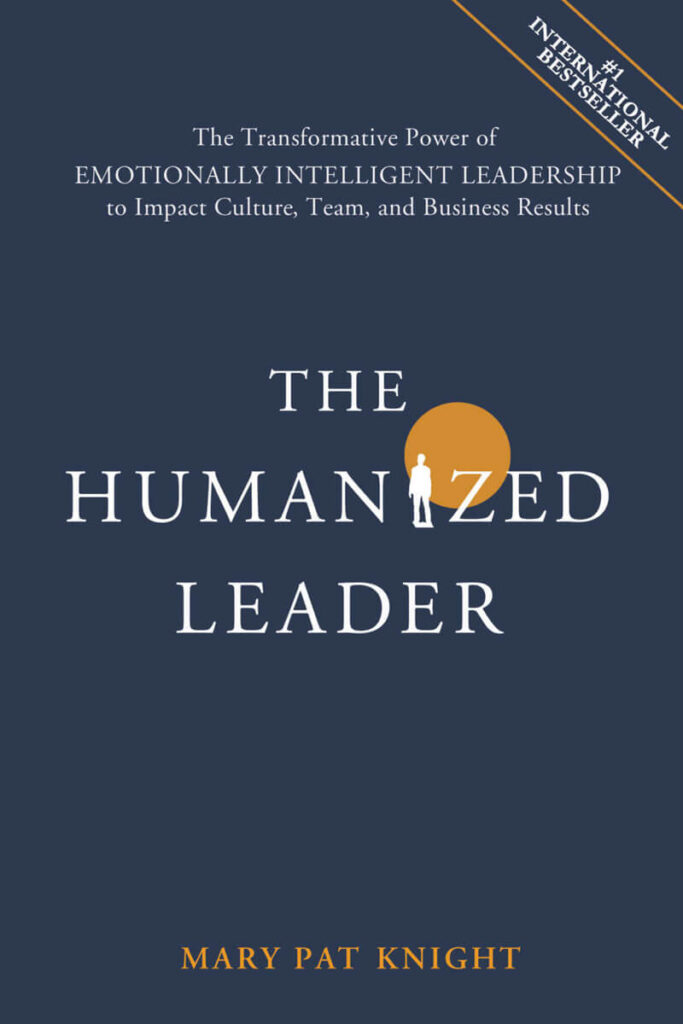
Mary Pat Knight is CEO of Leaders Inspired – an executive coaching and consulting agency devoted to the development of emotionally intelligent leaders. She is also the author of the Amazon #1 International Best Selling book, The Humanized Leader.
The ground-breaking new book, The Humanized Leader: The Transformative Power of Emotionally Intelligent Leadership to Impact Culture, Team and Business Results, is now available in Kindle, paperback, or as an audiobook. To get your copy – or extras for your team, click the button below.