
When Fear Is Making the Decision
How urgency quietly replaces clarity in leadership decisions.
Lately, I’ve been noticing how decisions get made when uncertainty lingers. And more often than not, fear is somewhere in the room.
Not fear itself. Fear is understandable. It’s human. Especially right now.
What I’m paying attention to is what happens when fear quietly becomes the decision-maker, without us realizing it.
Most of the time, it doesn’t announce itself. It doesn’t say, I’m afraid. Instead, it shows up as urgency. A subtle pressure to move. A sense that something needs to be decided quickly, if only to relieve the discomfort of not knowing.
Urgency can feel responsible. It can even feel like leadership.
But often, it’s simply fear asking to be soothed.
I’ve watched this play out in leadership conversations recently in a way that stayed with me. Two people. Two situations. Both facing real uncertainty. Both with legitimate reasons to feel unsettled. And yet, the way each person held that uncertainty led to very different outcomes.
One leader slowed things down, just enough to stay present with what was happening. There was fear there, yes, but it wasn’t being pushed away or rushed past. Questions were asked and assumptions were surfaced. The decision wasn’t forced, and there was room to consider what mattered beyond immediate relief.
Another leader felt worn down by the waiting. The uncertainty had been lingering for a while, and the desire to be done with it had grown strong. The decision that followed came quickly. It brought relief. And it also carried a sense of collapse. Not thoughtful closure, it was more like escape.
What struck me wasn’t the evaluation of which decision was “right.”
It was seeing the inner state from which each decision was made.
Fear has a way of narrowing our field of vision. It pulls attention toward short-term relief and away from longer-term alignment. It wants certainty, not clarity. It demands resolution, rather than understanding.
When fear goes unexamined, it tends to borrow urgency. Fear is judged as weak while urgency can look efficient. It can look decisive. It can look like forward motion. But let’s be candid, the urgency that sits like a pit in your stomach – it’s simply fear asking to be soothed. Urgency is used to fulfill the desire to get back to something familiar, to quiet the discomfort as quickly as possible.
This is where leadership becomes tricky.
Leaders are expected to decide, and move, and act. And there is a fine line between decisiveness and reactivity, between choosing from clarity and choosing to escape discomfort. That line is not always obvious in the moment.
I don’t believe fear is the problem. The question is whether fear gets to drive.
When fear is left unnamed, it tends to collapse options and narrow perspective. It shortens the horizon of what we’re willing to consider. Decisions made from this place often feel clean on the surface, but they are left unresolved underneath.
I’ve seen leaders carry the weight of those decisions long after the relief wears off. It looks like second-guessing, lingering doubt. There is an undercurrent, a quiet sense that something important was rushed. Decisions made from this place carry a hidden cost and the price is erosion of trust.
Leadership isn’t about eliminating fear. It’s about noticing when fear has moved into the driver’s seat.
So I’ll leave you with the question I’ve been sitting with this week:
What am I trying to get relief from right now? And how might that be shaping the decision in front of me?
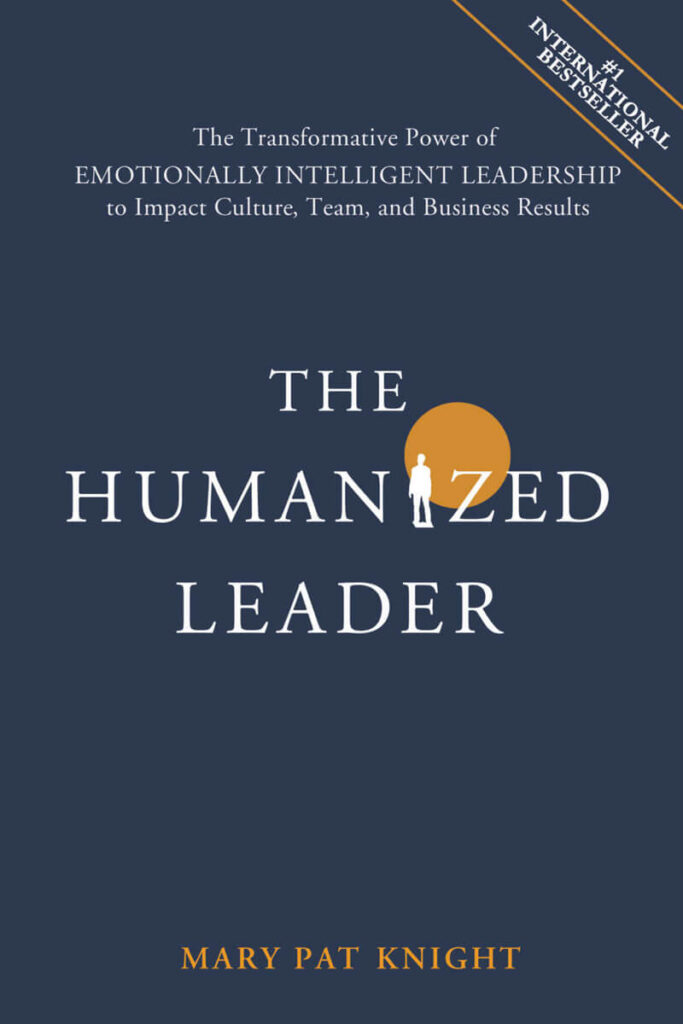
Mary Pat Knight is CEO of Leaders Inspired – an executive coaching and consulting agency devoted to the development of emotionally intelligent leaders. She is also the author of the Amazon #1 International Best Selling book, The Humanized Leader.
The ground-breaking new book, The Humanized Leader: The Transformative Power of Emotionally Intelligent Leadership to Impact Culture, Team and Business Results, is now available in Kindle, paperback, or as an audiobook. To get your copy – or extras for your team, click the button below.