

The Kind of Influence This Moment Is Asking For
I’ve been noticing something in myself lately. And in the leaders I work with.
It’s not about strategy or decisions, at least not directly.
What I’m circling around is influence. Not so much the visible kind, but the kind that comes from a leader’s internal steadiness and how that inner state quietly shapes what others feel, trust, and follow.
It has to do with where attention goes when pressure shows up.
You’ve probably felt the difference. There are times when attention feels open and steady. You can take things in. You can listen. You can hold more than one truth at a time. And then there are moments when attention tightens. It narrows. It locks onto something that feels urgent or threatening, and before you know it, everything starts organizing around that.
Most of us don’t notice the shift when it happens, at least not in obvious ways. It doesn’t always show up as anger or force. In fact, it often looks like strong leadership. Faster conclusions. Firmer positions. A quiet sense of I already know what needs to be done.
This is usually the moment curiosity begins to go offline.
And when that happens, listening slips out of the room.
I see this a lot right now. And if I’m honest, I catch it in myself too.
What I’ve come to believe is that leadership in this moment isn’t being asked to become louder, sharper, or more decisive. It’s being asked to develop a different relationship with awareness.
That means noticing what’s happening internally without immediately reacting to it.
I think of this as holding awareness with a bit of space around it. Not detachment in the sense of pulling away, but detachment in the sense of not letting fear take the wheel. Being able to notice agitation, urgency, or worry and not immediately organize yourself or others around it.
Fear is powerful.
I had a conversation recently that stayed with me. Not because of the specifics, but because of what happened when fear was simply named. When someone paused long enough to notice where their fear actually was as a felt experience, it softened. Not disappeared. Softened.
What struck me wasn’t the fear itself, but how much energy had been going into riding it, managing it, bracing against it. Awareness didn’t solve anything in that moment. But it changed the quality of the conversation. And that change mattered. It opened space for something new to be considered.
When that kind of awareness doesn’t happen, the pattern is fairly predictable. Fear drives focus. Focus drives behavior. And behavior carries a kind of urgency or rigidity into the room. People feel it before anything is said.
When it does happen, something else becomes possible.
Responsiveness replaces reactivity. Listening returns. Influence softens but it doesn’t weaken. In fact, it becomes more trustworthy. Action still happens. Decisions still get made. They just come from a steadier place.
This is the kind of leadership I’ve been watching many of my clients grow into over the past year.
Something in them loosens its grip. Control relaxes just enough for a different way of seeing to emerge. The work changes. Conversations slow down and become more intentional. Decisions are held with greater awareness of both practical realities and emotional undercurrents.
What shows up isn’t passivity or hesitation. It’s a quieter intelligence. A grounded clarity that doesn’t need to prove itself. Leadership that feels humble and wise, not because it’s uncertain or weak, but because it’s no longer defended as the only way.
I keep coming back to a simple question in my own work and life:
What kind of influence does this moment in time actually require?
Not what looks strong.
Not what feels productive.
But what steadies the field.
More often than not, the answer isn’t to do more. It’s to do what you can and no more. To speak when your voice is clean. To act when action is aligned. And to let go of what doesn’t belong to you to carry.
That can feel uncomfortable, especially for leaders who are deeply responsible and conscientious. It can even feel risky. But restraint that comes from awareness and not avoidance isn’t withdrawal. It’s maturity.
Many leaders right now are carrying a low-grade frenetic energy. Not quite panic, just constant motion. Split attention. Minds that never quite settle. Bodies that are tired. This kind of internal fragmentation quietly erodes influence. Even well-intended leadership can start to feel noisy.
There is a remedy.
When awareness returns, energy comes back into the body and settles. The nervous system calms. The body feels safer. And from that place, creativity and clear action tend to emerge on their own.
This isn’t mystical.
It’s human.
People trust leaders who are settled in themselves.
They may not be able to articulate why, but they feel it.
As I continue writing this year, this is the territory I’m most interested in exploring. Not leadership as performance or persuasion, but leadership as presence. As regulation. As quiet influence that doesn’t demand attention but changes the room anyway.
I’ll leave you with the question I’m contemplating myself:
Where is my attention resting right now?
And what kind of leadership does that make possible?
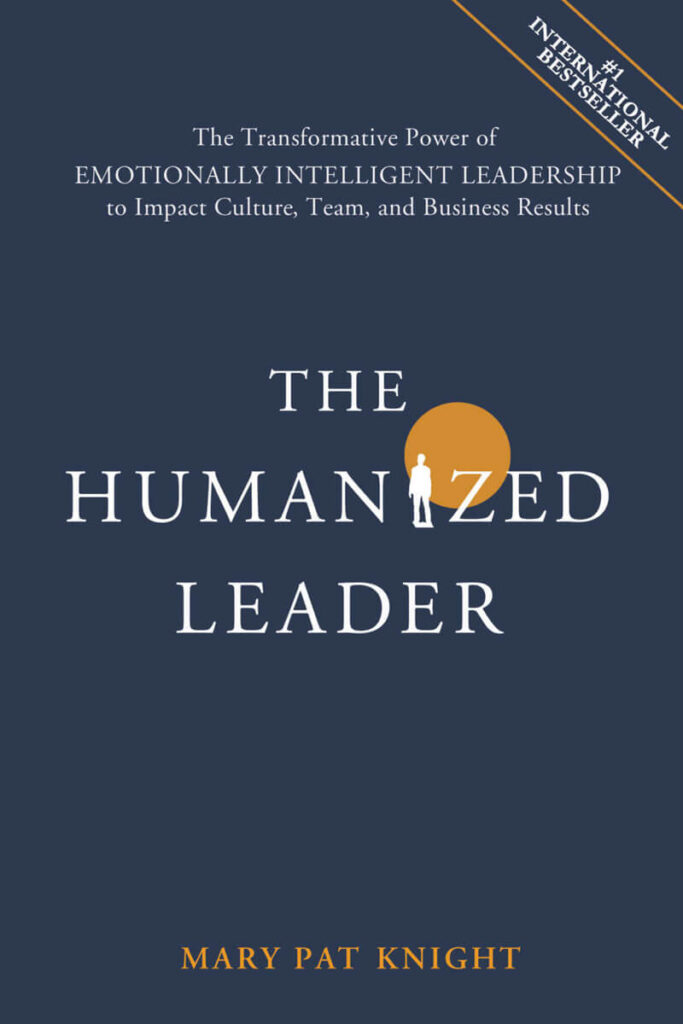
Mary Pat Knight is CEO of Leaders Inspired – an executive coaching and consulting agency devoted to the development of emotionally intelligent leaders. She is also the author of the Amazon #1 International Best Selling book, The Humanized Leader.
The ground-breaking new book, The Humanized Leader: The Transformative Power of Emotionally Intelligent Leadership to Impact Culture, Team and Business Results, is now available in Kindle, paperback, or as an audiobook. To get your copy – or extras for your team, click the button below.