

What I Know Now That I Didn’t Know Then
Five Years of Living the Work of Humanized Leadership
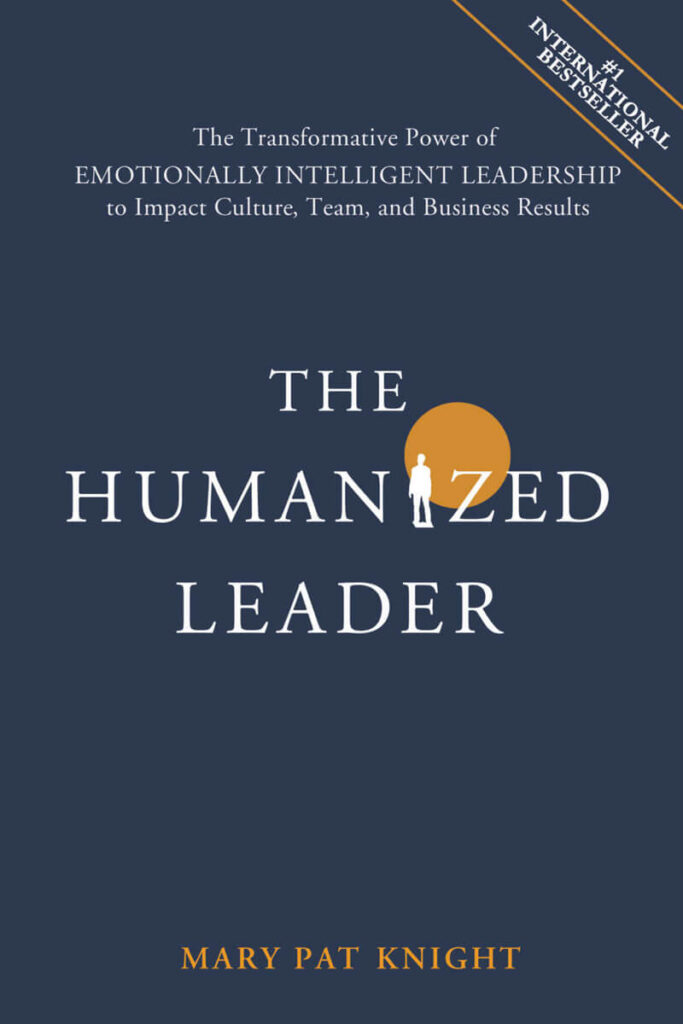
Happy Birthday!!! Five years ago this week, The Humanized Leader was released into the world.
I didn’t mark the date at the time. I didn’t have a sense that it would matter in the way it does now. But as I’ve been writing again this month and reflecting on what has evolved in me and in the work, the anniversary has been quietly present.
What strikes me most, looking back, is not what the book taught, but what it held.
Although there are plenty of skills and practices woven throughout its pages, the heart of the work has always been about something deeper. Over time, those concepts have matured into a cohesive container for emotionally intelligent leadership. Less a set of tools. More a way of being.
Leadership as a Way of Being
One of the clearest shifts for me has been the understanding that emotional regulation is not an add-on to leadership. It isn’t something to address only once things go wrong. It is foundational. And it is work.
Unwinding and rewiring habits of protection takes intention and consciousness. It asks us to look honestly at how we’ve learned to defend, control, fix, or perform. It asks us to examine biases rooted in positional definitions of superiority and capability. And it asks us to come face to face with both our own humanity and the full humanity of others.
The world does not work better when we try to know everything or fix everything. Leadership, as I now understand it, is far more relational than that.
Communication is leadership.
The ability to listen fully and completely, with respect and reverence, has the power to shift outcomes, cultures, and relationships. Not because it’s soft, but because it’s grounding. Because it creates the conditions for truth to surface.
The same has proven true with feedback. Over time, I’ve come to see that feedback is far simpler than we make it. We complicate it when we don’t manage our own discomfort, or when we sit on a quiet high horse of superiority. At its core, feedback is simply a conversation focused on making something better or correcting an error. Nothing more. Nothing less.
What truly changes everything is a coaching mindset.
The ability to stay curious. To regulate ourselves. To communicate with emotional intelligence. To trust that people grow faster when they are not managed into compliance, but invited into ownership. Coaching requires both inner discipline and outer skill. And once learned, it tends to ripple outward in ways we don’t always anticipate.
This work has never been only internal or only external. It has always been both.
There is a dual track present in real leadership development: what I learn, practice, and transform in myself, and what I then carry into my teams, my organizations, and my relationships. That may be one of the reasons this work has traveled so easily beyond the workplace.
Over the years, I’ve heard from countless people who discovered that the same skills that changed how they led at work also transformed their marriages, their parenting, their friendships, and their family systems. Humanized leadership turns out to be human living.
How the Work Has Expanded
There are places where the work has expanded since the book was written.
At the time, I didn’t fully address the system of managing performance. My later writing and teaching introduced a more complete performance management cycle, one that acknowledges the flow from clear expectations and agreements, to training and resources, to coaching, to feedback, and finally, to appreciation. Seen this way, performance becomes developmental rather than punitive. Human rather than mechanical.
And there are still edges that continue to unfold.
The concept of Genius, for example, wasn’t explored to its full capacity in the original work. That feels like a conversation still ahead, one worth taking up more fully as the work continues to evolve.
What I Hold Differently Now
If I were to say one thing I hold differently now than I did then, it would be this:
- Humanized leadership is not something we implement.
- It is something we practice.
- Over time.
- Imperfectly.
- In relationship.
Five years later, I am less interested in getting it right and more committed to staying awake. Less attached to certainty and more devoted to presence. Less focused on teaching and more grounded in living the work.
This anniversary doesn’t feel like a celebration as much as a quiet confirmation. That this way of leading, when practiced with intention and humility, still matters. And that the work continues.
Mary Pat Knight is CEO of Leaders Inspired – an executive coaching and consulting agency devoted to the development of emotionally intelligent leaders. She is also the author of the Amazon #1 International Best Selling book, The Humanized Leader.
The ground-breaking new book, The Humanized Leader: The Transformative Power of Emotionally Intelligent Leadership to Impact Culture, Team and Business Results, is now available in Kindle, paperback, or as an audiobook. To get your copy – or extras for your team, click the button below.