
Hope Is Not a Luxury. It Is a Leadership Requirement.
I sat with two founders recently, and you could actually feel the temperature change depending on who was speaking.
One was energized. He’d just fumbled a hiring decision that cost the firm time, money, and a decent chunk of goodwill. But he’d processed it, took the lesson, and refused to let the mistake define him. He was already talking about the next win and where the business was headed. He had momentum.
The other founder was in a different zip code. A minor misunderstanding had occurred (it was one of those moments that lands wrong) and he’d held onto it until it grew into something massive. The hope had drained out of his thinking. He was questioning the business, his place in it, and whether he was even needed. By the time we sat down, his frustration had contracted into something guarded and sharp.
The hopeful founder did what we all do when someone we care about is sinking: he tried to “fix” it. He offered more, explained better, and pushed harder. None of it worked.
It only shifted when we had a coached, blunt conversation where both men finally said what was actually true. Once the armor came off, the tension broke. They found their footing. The hope that had been missing from the table began, slowly, to come back.
When Hope Gets Stolen
I see a subtler version of this every week. It’s harder to name because it doesn’t announce itself with a bang.
Think of a leader whose anxiety has outpaced the facts. The situation is tough, sure, but the story in their head is dire. In “Humanized Leader Speak”, I call this catastrophizing. Their fear is real, but it’s become loud enough to fill the entire office. The people around them who are the ones doing the actual work, start absorbing that fear by osmosis. Confidence erodes. Conversations that used to be a spark now feel like a risk.
This is what hope deprivation looks like. It’s not a dramatic collapse; it’s a slow dimming. It’s a resentment that builds without a clear source, carried in on the current of someone else’s exhaustion.
The World Is Not Helping
Let’s be honest: the world is working overtime to steal your hope. The headlines, the exhaustion of leading in a climate that rewards “loud” over “thoughtful,” and the sense that the ground is constantly shifting.
If you’re finding hope hard to access right now, that isn’t a character flaw. It’s an honest response to a brutal moment.
But this is also the exact moment when hope becomes a requirement. People are watching to see how you hold the weight. The leaders who actually move people aren’t the ones who had it easy; they’re the ones who looked at a hard reality and chose to move toward what was still possible anyway. That’s not naivete. It’s a form of courage we don’t talk about enough.
What Hope Actually Requires
Hope is not optimism. Optimism is a sunny disposition and you either have it, or you don’t.
Hope is a choice. It’s an emotional intelligence competency.
It requires the guts to feel the weight of the moment without being flattened by it. It requires enough internal work to know when your fear is giving you useful data and when it’s just trying to run the meeting.
The leader who maintains hope under pressure isn’t unaffected by the difficulty. They’ve just done enough “interior heavy lifting” to know the difference between a signal that requires action and a fear that requires management. They can hold both the weight of what is real and the orientation toward what is possible. And because they can hold it, the people around them can borrow from it.
That is not a small thing. In a moment like this one, it may be one of the most consequential things a leader can offer.
This Is Not a Call to “Feel Better”
Choosing hope isn’t the same as feeling hopeful. It’s a decision that the difficulty of the moment won’t be the final word. It’s taking one purposeful action when the momentum is running the other way.
It looks like the founder who processed the bad hire and kept moving. It looks like having the direct conversation instead of letting the resentment compound. It looks like naming the fear in the room without letting it become the permanent weather.
The Ask
I don’t want you to finish this, feel a brief spark, and go back to a contracted state. I’m asking for something concrete.
Identify one place where hope has stopped showing up. A relationship, a project, or a part of the world that makes you feel stuck. Name it, to yourself first.
Then take one action in the next two weeks that moves toward what is still possible there. Not a grand gesture. A real one.
And then tell someone. A colleague, a coach, a trusted peer, someone who will ask you whether you did it. Accountability is not a mechanism for shame. It is the thing that converts a private intention into an actual commitment. We are swimming in private intentions that never found their footing.
If you want that person to be me, reach out. I mean it.
Hope is what you choose when things are not easy. Right now, your people need you to choose it.
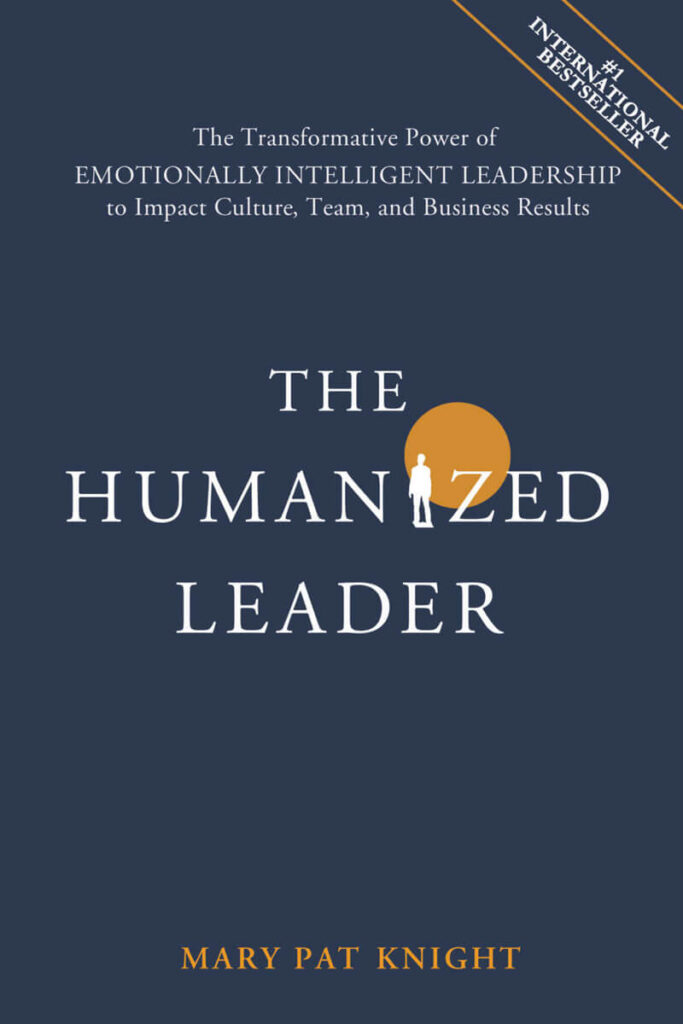
Mary Pat Knight is CEO of Leaders Inspired – an executive coaching and consulting agency devoted to the development of emotionally intelligent leaders. She is also the author of the Amazon #1 International Best Selling book, The Humanized Leader.
The ground-breaking new book, The Humanized Leader: The Transformative Power of Emotionally Intelligent Leadership to Impact Culture, Team and Business Results, is now available in Kindle, paperback, or as an audiobook. To get your copy – or extras for your team, click the button below.