

The Work of Staying
Resilience when there is nothing to fix.
The Phrase Is Not the Problem
The people who reach for that line are not unkind. They are uncomfortable. They are standing at the edge of someone else’s pain. They feel the human urge to make it smaller or hand it back wrapped in something manageable. The phrase is not for the person receiving it. It is for the person offering it.
That distinction matters more than we usually admit. When someone else’s reality bumps against our comfort zone, the instinct is to offload. We try to fix, explain, or reassure. It feels like help. It often isn’t. What it actually does is relieve our own discomfort at the expense of the other person’s experience. They walk away with a platitude instead of a witness. We walk away having avoided the feelings the moment required.
What Resilience Actually Requires
We talk about resilience as if it’s a form of speed. We measure it by how quickly someone gets back to functional. Sometimes that agility matters. But the reflex version is closer to optimism-as-performance than anything earned. It is the leader who is “fine” before they have actually processed the hit. They keep the energy up because sitting with uncertainty feels like weakness. They move on before the lesson has had time to land.
The deeper version is slower. It is less comfortable to watch. Certainly less comfortable to feel.
Real resilience is the capacity to stay present with what cannot be resolved. It means holding a hard reality without collapsing or explaining it away. It requires knowing the difference between a feeling that needs action and one that needs patience. That knowing doesn’t arrive from reading a book. It comes from the trenches. It comes from the internal work that teaches you to recognize your own discomfort before you project it onto someone else. That leader looks different in a hard moment. They are not louder or more certain. They are more settled.
What I Did, and Didn't Do
When I reached out to these friends, I was only partially successful.
I caught the platitude before it left my mouth. I am glad about that. But caring deeply makes neutrality harder than it sounds. Two of the situations felt genuinely unjust. I took sides. I let my read on the situation bleed into the conversation. It probably reflected my truth more than theirs. There is almost always more than one experience of a hard situation. The people on the other side of the ones I love have their own truth, even when I can’t access it.
The third situation was different. There was no injustice to name. It was simply hard. It needed to play out in its own time because there is no reasonable resolution available. That one asked for something more difficult than advocacy. It required staying present in the middle of something that isn’t going to get better soon. No timeline. No silver lining. No next step.
What people often need is not your read on their situation. They need the experience of not being alone in it. I got there in my own reflection. I get to practice it better next time.
Wise Waiting Is Not Passive
The restraint I wish I had practiced more fully is not a passive thing. It only looks that way from the outside.
Wise waiting is active. It requires discipline to monitor your impulses in real time. You have to recognize when you are reaching for a phrase just to relieve your own heavy-duty settling. It requires the willingness to sit with perplexity without rushing toward a hand-off. Reflection and considered silence are not the absence of action. They are among the hardest things a leader can choose. They rarely get named as the leadership behaviors they actually are.
The leaders who are most useful in hard moments are rarely the ones with the best answers. They have done enough interior work to stay present without an agenda. They witness without fixing. They care without collapsing. Because they can hold it, the people around them feel held. Difficulty is arriving faster than most of us can process. That capacity to stay may be the most useful thing you can offer.
The Question Worth Sitting With
I am not suggesting you become someone who withholds. I am not asking you to hide behind restraint as a form of armor.
What I am asking is whether you can tell the difference between an impulse that serves the person in front of you and one that serves your need to feel useful. Can you stay un-armored in their pain?
That is a harder question than it looks. It doesn’t have a clean answer.
Where are you reaching for a phrase when what someone actually needs is your presence?
Not your solution. Not your reframe. Not the thing you say to make the moment feel resolved.
Just you, staying.
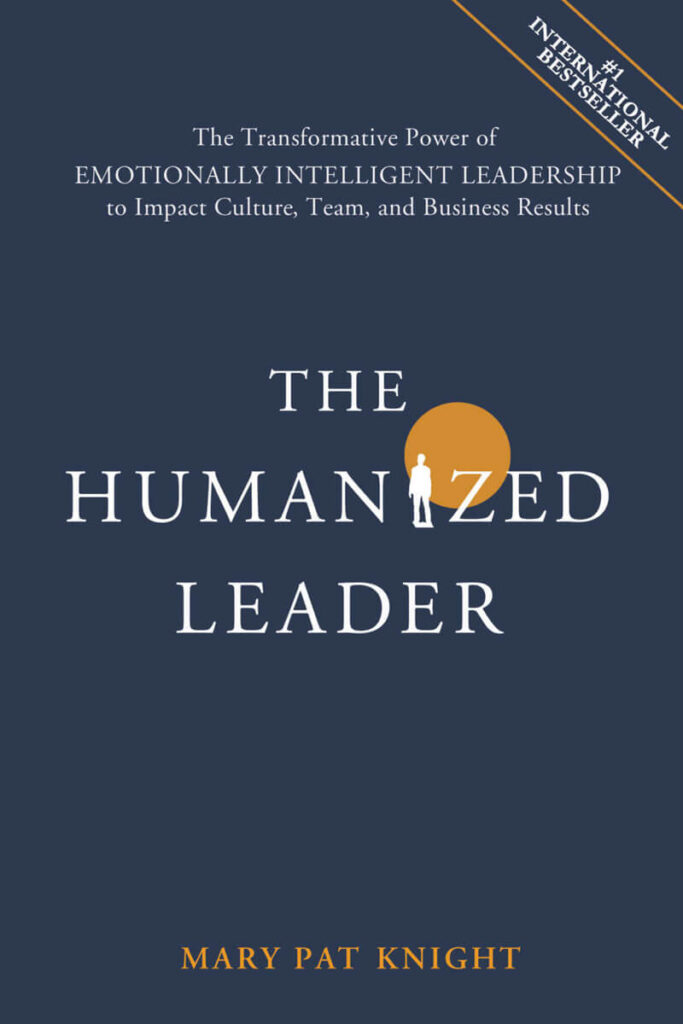
Mary Pat Knight is CEO of Leaders Inspired – an executive coaching and consulting agency devoted to the development of emotionally intelligent leaders. She is also the author of the Amazon #1 International Best Selling book, The Humanized Leader.
The ground-breaking new book, The Humanized Leader: The Transformative Power of Emotionally Intelligent Leadership to Impact Culture, Team and Business Results, is now available in Kindle, paperback, or as an audiobook. To get your copy – or extras for your team, click the button below.