

When Certainty Replaces Curiosity
How leadership loses its humanity without ever raising its voice
I’ve been paying attention to what happens in leadership when curiosity begins to narrow.
Not dramatically, nor loudly.
More often, it happens through small shifts. Faster conclusions and firmer positions lead to a confidence of already knowing what needs to be done. Certainty begins to replace curiosity, and listening quietly slips out of the room.
This kind of certainty often looks competent, responsible and even strong. It’s efficient as it moves things forward. And in many leadership cultures, it’s rewarded.
But over time, I’ve noticed that when curiosity goes offline, something else follows. Patterns we don’t easily see in ourselves, but that others feel. There is tension in the room and a narrowing of perspective. One feels a loss of openness that’s hard to name, but easy to experience.
That noticing led me back to a truth I’ve learned again and again in my work: the power of Humanized Leadership has never been diagnosis.
It is not about naming what’s wrong with people.
It is about creating the conditions for self-recognition.
That’s why, when we talk about leadership shadow, the question isn’t which shadows exist. There are many. Ego. Control. Resistance. Shame. Caretaking. The list can get long very quickly.
The more important question is this:
Which shadow organizes the others?
At the heart of The Humanized Leader has always been a simple truth: unregulated leaders externalize their inner state onto others. Simply put, we compare our inside to someone else’s outside.
When we’re unsettled, unsure, or overwhelmed on the inside, it shows up somewhere. Often not as chaos, but as certainty.
This is the shadow I’m noticing most in leadership right now.
Not cruelty.
Not incompetence.
Certainty.
The quiet kind that feels virtuous, efficient, even responsible. Certainty that says I already know, there’s nothing more to consider, this is the right way forward. It’s rewarded as leadership and rarely recognized as shadow.
Under pressure, certainty can masquerade as strength. But more often, it signals something else: a nervous system that has stopped being curious.
And when curiosity goes offline, listening usually follows.
That’s where certainty becomes a problem. Not because certainty itself is bad, but because it quietly erodes trust. It narrows perspective. It replaces inquiry with conclusion. And that is the antithesis of humanized leadership.
What makes certainty such a powerful organizing shadow is how many other patterns nest beneath it.
Ego, for example, doesn’t always announce itself with bravado. It’s protected by certainty. The quiet confidence of I know.
Control shows up when certainty insists there is a right way. Control is simply certainty applied to others. Innovation and creativity rarely survive in its wake.
Resistance often sounds reasonable on the surface. There’s nothing new to consider. It’s certainty refusing curiosity, often defending the familiar edges of identity.
And caretaking, which so often is mistaken as kindness, frequently carries the message I know what’s best for you. In that form, caretaking becomes certainty disguised as compassion. This is where co-dependency quietly enters the room, even in well-intentioned leadership. I know this shadow personally, and I’ll say more about it in time.
I’ve seen all of this play out in organizations and families I’ve worked with for decades. And, if I’m honest, I’ve seen it in myself. Especially under pressure. Especially when responsibility feels heavy.
Certainty isn’t the problem.
The shadow appears when certainty replaces curiosity.
When being right matters more than being aware.
When reflection is sacrificed for efficiency.
That’s how humanized leadership erodes. Not through malice, but through the gradual loss of self-reflection.
Which leaves me with the question I’m sitting with most these days, and the one I’ll offer here without answer or instruction:
Where has certainty replaced curiosity in my leadership?
It’s a non-threatening and mature question.
And, in my experience, an unavoidable one.
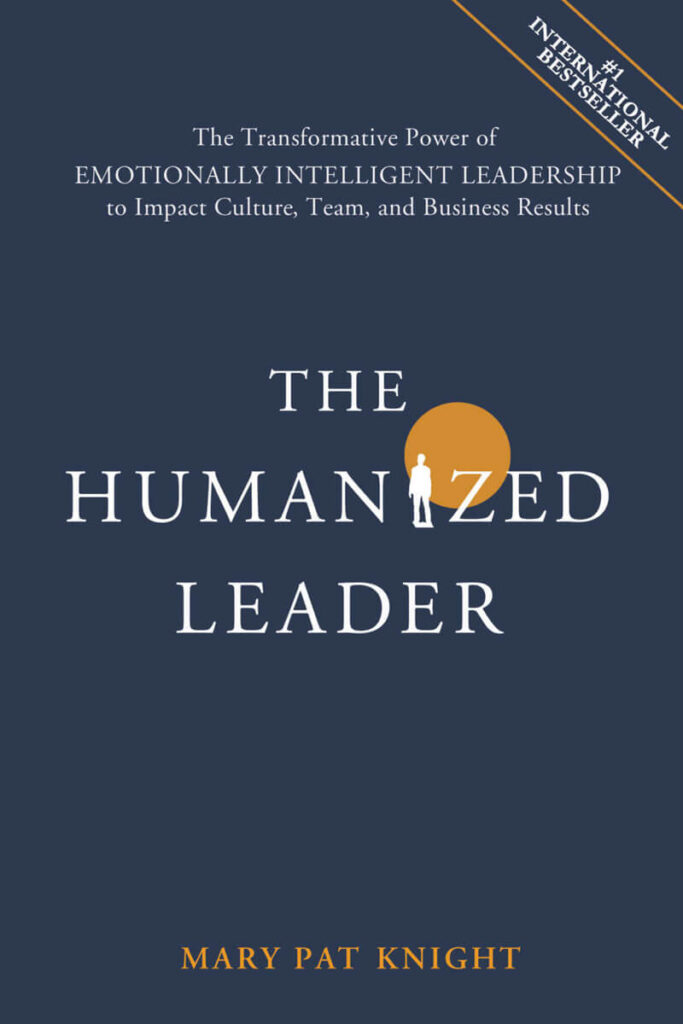
Mary Pat Knight is CEO of Leaders Inspired – an executive coaching and consulting agency devoted to the development of emotionally intelligent leaders. She is also the author of the Amazon #1 International Best Selling book, The Humanized Leader.
The ground-breaking new book, The Humanized Leader: The Transformative Power of Emotionally Intelligent Leadership to Impact Culture, Team and Business Results, is now available in Kindle, paperback, or as an audiobook. To get your copy – or extras for your team, click the button below.