

The Echo
There is a particular kind of confidence that follows a hard conversation.
It doesn’t feel like arrogance. It’s more like a release of tension that comes when you’ve finally said what needed to be said and emerged intact. You stayed composed. You were clear. Skills practiced, box checked: that went well.
I’ve felt that relief. I’ve watched clients rely on it. And I’ve learned, often the hard way, to be careful with it.
Not long ago, I was working with a leader on a friction point with one of her direct reports. The report was capable and driven, but her communication had a sharpness that landed harder than she intended. People felt shoved rather than supported, even when her logic was sound.
We approached it not as a correction but as a translation. How do you offer direction without an edge? How do you speak directly and still leave room for the other person to actually hear you?
She took it seriously. A few weeks later, a natural opportunity came — a tough feedback conversation with someone on her team. She came back energized. She’d been thoughtful, she’d followed what she’d learned. From where she stood, something had shifted.
The following week, the echo came back.
The person on the receiving end reached out to my client. The conversation hadn’t gone well at all. It had felt clinical, inauthentic, disconnected from the relationship. The message arrived. The human being delivering it didn’t.
Two entirely different realities from the same thirty minutes.
Listen, gaps are inevitable. That’s how we learn, if we’re willing to. What matters is how easily a gap like this can remain invisible. If the receiver hadn’t felt safe enough to speak up, the leader would have moved forward with a success story that wasn’t true.
Most leaders I work with are no longer avoiding the hard conversations. That’s real progress. They’re having the exchanges they used to defer, using what they’ve learned. And then, almost by reflex, they evaluate from the inside: did I say what I needed to say, did I stay regulated, did I follow what I know?
All of that matters. None of it tells you whether the conversation actually worked.
A leadership conversation doesn’t land where it’s spoken. It lands where it’s received.
We know our own intent but have almost no access to the other person’s experience. This is especially true if they tend to protect the relationship or process in private. So, we check the box from the only data we have and move on.
The work of leadership doesn’t end when you stop talking. There is a step that follows. It’s the willingness to stay curious a little longer. And to be clear, this isn’t about finding out if you did it right. It’s about staying in a relationship with the person in front of you, taking responsibility for the impact of your words, and offering a hand for the step forward. Sometimes that looks like a simple follow-up: I’ve been thinking about our conversation. How did that land for you? Is there anything you’re still sitting with? Not a performance check. A genuine act of care.
Other times, the information is subtler. You pay attention to what happens next and whether the relationship feels more honest or more guarded, whether engagement shifts, and whether behavior moves in the direction you’d hoped. People don’t always tell you the truth in words. They show you in their posture and their actions, if you’re watching.
What this requires isn’t a new technique. It’s the steadiness to receive an answer you didn’t expect, the humility to accept that your experience of a conversation is only half the story, and the willingness to re-enter a space you thought was finished.
That last one is the hardest.
There is something deeply human about wanting the hard part to be over. The desire for closure is real, and it can close the loop before the loop is actually complete.
I’ve started asking myself three things the day after a difficult conversation: who did most of the talking in those final minutes, and if it was me, was I filling silence rather than creating space? Could they repeat back my intent, or just my content? Because if they only heard the data, they didn’t hear the human. And if something still feels unresolved, it deserves a simple note: I’m still thinking about our conversation. The best thoughts often come later. Is there anything you’re still sitting with?
The question isn’t whether you had the conversation. It’s whether you have the courage to find out what happened on the other side of it.
I’d love to hear how you move past checking the box and into that real follow-up. Share your thoughts in the comments — those conversations often matter as much as the article itself.
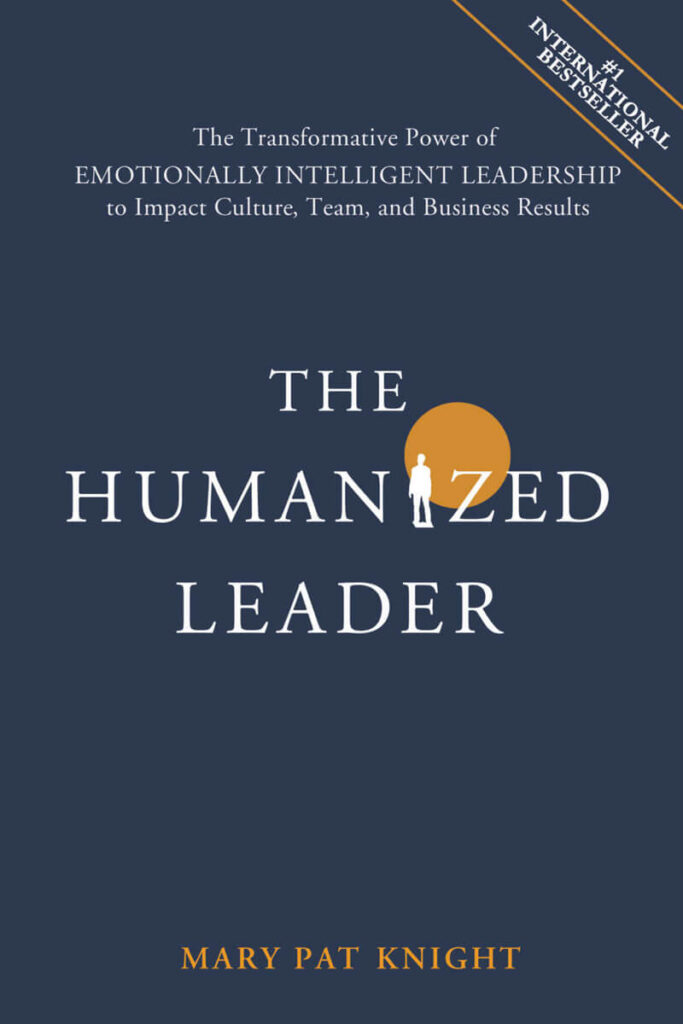
Mary Pat Knight is CEO of Leaders Inspired – an executive coaching and consulting agency devoted to the development of emotionally intelligent leaders. She is also the author of the Amazon #1 International Best Selling book, The Humanized Leader.
The ground-breaking new book, The Humanized Leader: The Transformative Power of Emotionally Intelligent Leadership to Impact Culture, Team and Business Results, is now available in Kindle, paperback, or as an audiobook. To get your copy – or extras for your team, click the button below.