

The Leaders We Need Now
A generation of leaders is heading for the exits. What happens next is urgent.
We are hitting a massive, subterranean shift. This isn’t the kind of disruption that gets a catchy name in a trend report or a dedicated slide at a conference. It’s the more heavy-duty kind. It’s the one you only start to feel when you’ve been watching leaders long enough to see the cracks in the old foundation. The Boomers and the front edge of Gen X are hitting the exits in droves, taking the largest concentration of leadership experience in history with them.
The gap between their departure and the next generation’s arrival is a massive question mark. It’s not just about who fills the boxes on the org chart. It’s about wisdom. What actually sticks, what gets tossed in the trash, and who gets to decide the difference?
This conversation deserves some scrutiny and honesty.
Thirty Years of observation
I’ve spent three decades working alongside and sitting with leaders when they’ve finally stopped pretending. I’m not talking about the “on-brand” version they bring to the boardroom. I’m talking about the version that shows up when they’re stuck with an old playbook failing, and genuinely rattled.
When a leader finally stops performing and starts doing the internal heavy lifting, something changes. I call it grace—and I know that’s a “soft” word for a tough environment, but I’m using it on purpose. Grace, here, means you’ve stopped letting your ego or your need for comfort run the meeting. It means you’re willing to feel like a beginner again if it helps someone else grow. It’s making a call based on a raw mix of facts, gut instinct, and hope, rather than acting out of a fear of being wrong. I often coach leaders to be mindful of head (facts), heart (hope), and gut (instinct) before they ever move to hands (action).
It also means stripping away the armor and realizing the answer is usually already in the room. One of the most liberating things you can learn as a leader is that you don’t have to be the smartest person at the table. You just have to be the one brave enough to build a space where the truth can actually come out. That one realization shifts the whole dynamic from a solo performance to actual, purposeful collaboration.
What’s Actually at Stake
Wisdom doesn’t just hand itself over. It’s not an automatic download. It happens through the friction from honest, messy conversations. But that requires something a lot of senior leaders haven’t been willing to do: letting go of the “how” so the “what” can actually survive.
Let’s be real: the next generation doesn’t usually start by rejecting wisdom. They start by rejecting the delivery. When “wisdom” shows up wrapped in ego or a demand to be thanked for a legacy, people check out. If you’re defending your territory instead of sharing a map, the younger generation smells the insecurity instantly.
And look, the world right now makes this harder. The stuff that actually makes leadership human like deep listening, compassion, staying curious when someone is wrong, is under massive pressure. I’m not a pessimist, but I’m clear-eyed: leading this way takes way more guts than it did a decade ago. If you choose it, you’re swimming against a heck of a current.
What "Humanized" Actually Means
I’ve spent my life on one bet: that leadership done humanly changes everything. That doesn’t mean being soft or a pushover. It means acknowledging the full, messy humanity of everyone in the room—yourself included.
What does that look like?
- It looks like telling a brutal truth with actual kindness.
- It looks like dropping the performance where we play the hero or the victim or the villain and just showing up as a person.
- It looks like admitting that creating with people is better than directing them.
I’m Still in the Trenches
I’m not ending this with a neat summary because I don’t have one.
I don’t know exactly what leadership needs to be in five years. I have some deep convictions and thirty years of evidence, but the full picture is still being painted.
The leaders who will actually matter aren’t the most visionary or the most decorated. They’re the ones willing to do the internal work—the ones who can process their own baggage before they dump it on their team. They’re the ones who stay curious even when the world is screaming for them to be certain and loud.
This kind of leadership isn’t a gift. It’s a practice. It starts with the willingness to look in the mirror before you look at the strategy deck.
I’m still practicing. I probably always will be.
So I will leave you with the question I keep returning to myself. What do we most want the next generation of leaders to carry forward from this one, and what do we most want them to have the courage to leave behind? I would be honored to hear what is true for you.
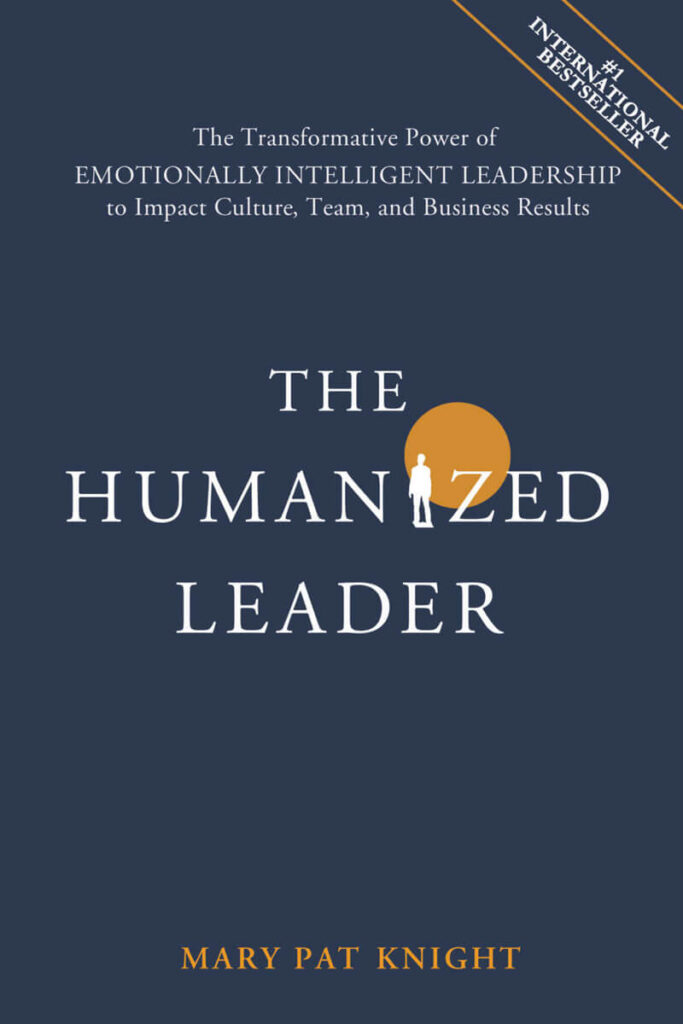
Mary Pat Knight is CEO of Leaders Inspired – an executive coaching and consulting agency devoted to the development of emotionally intelligent leaders. She is also the author of the Amazon #1 International Best Selling book, The Humanized Leader.
The ground-breaking new book, The Humanized Leader: The Transformative Power of Emotionally Intelligent Leadership to Impact Culture, Team and Business Results, is now available in Kindle, paperback, or as an audiobook. To get your copy – or extras for your team, click the button below.